RSS

Category Archives: Luke

Psalm 143:10a

Teach me to do your will, for you are my God.
Psalm 143:10a

Dear God, this seems like the scariest thing I could pray. This was a psalm of David. Were some of the struggles he brought upon himself, especially in the second half of his reign, just you answering this prayer.

I’ll admit that I’m not sure I have the courage to pray it. Aren’t I doing enough to follow your will already? I don’t really need to grow from here, right? (Sarcasm intended.) But seriously, is there any way that I can discipline myself to learn the lessons you have for me without suffering too much?

The problem is that there are multiple things that come from my suffering. Beyond the lessons I learn about following you, there is also a humility and empathy that comes from struggle and failure that can often only be learned through in the valleys. They add depth to my character and make me more salty as I go into the world as your ambassador. (Luke 14:28-35)

“But don’t begin until you count the cost. For who would begin construction of a building without first calculating the cost to see if there is enough money to finish it? Otherwise, you might complete only the foundation before running out of money, and then everyone would laugh at you. They would say, ‘There’s the person who started that building and couldn’t afford to finish it!’ “Or what king would go to war against another king without first sitting down with his counselors to discuss whether his army of 10,000 could defeat the 20,000 soldiers marching against him? And if he can’t, he will send a delegation to discuss terms of peace while the enemy is still far away. So you cannot become my disciple without giving up everything you own. “Salt is good for seasoning. But if it loses its flavor, how do you make it salty again? Flavorless salt is good neither for the soil nor for the manure pile. It is thrown away. Anyone with ears to hear should listen and understand!”
Luke 14:28-35

Father, I guess I have to say it anyway: Please make me salty. Whatever that means. I have counted the cost. I consider my life worth nothing to me. I am yours. Please be gentle.

In Jesus’s name I pray,

Amen

 
Leave a comment

Posted by on September 8, 2019 in Luke, Psalms


Passion Week – The Last Supper: Matthew, Mark, Luke & John

The above image is from Revealed: A Storybook Bible for Grown-Ups by Ned Bustard. The image itself is called “Bitter Herbs” and was created by Tanja Butler.

MATTHEW

Matthew 26:20-35
When it was evening, he reclined at table with the twelve. And as they were eating, he said, “Truly, I say to you, one of you will betray me.” And they were very sorrowful and began to say to him one after another, “Is it I, Lord?” He answered, “He who has dipped his hand in the dish with me will betray me. 24 The Son of Man goes as it is written of him, but woe to that man by whom the Son of Man is betrayed! It would have been better for that man if he had not been born.” Judas, who would betray him, answered, “Is it I, Rabbi?” He said to him, “You have said so.” Now as they were eating, Jesus took bread, and after blessing it broke it and gave it to the disciples, and said, “Take, eat; this is my body.” And he took a cup, and when he had given thanks he gave it to them, saying, “Drink of it, all of you, 28 for this is my blood of the covenant, which is poured out for many for the forgiveness of sins. 29 I tell you I will not drink again of this fruit of the vine until that day when I drink it new with you in my Father’s kingdom.” And when they had sung a hymn, they went out to the Mount of Olives. Then Jesus said to them, “You will all fall away because of me this night. For it is written, ‘I will strike the shepherd, and the sheep of the flock will be scattered.’ 32 But after I am raised up, I will go before you to Galilee.” Peter answered him, “Though they all fall away because of you, I will never fall away.” Jesus said to him, “Truly, I tell you, this very night, before the rooster crows, you will deny me three times.” Peter said to him, “Even if I must die with you, I will not deny you!” And all the disciples said the same.

MARK

Mark 14:17-31
And when it was evening, he came with the twelve. And as they were reclining at table and eating, Jesus said, “Truly, I say to you, one of you will betray me, one who is eating with me.” They began to be sorrowful and to say to him one after another, “Is it I?” He said to them, “It is one of the twelve, one who is dipping bread into the dish with me. 21 For the Son of Man goes as it is written of him, but woe to that man by whom the Son of Man is betrayed! It would have been better for that man if he had not been born.” And as they were eating, he took bread, and after blessing it broke it and gave it to them, and said, “Take; this is my body.” And he took a cup, and when he had given thanks he gave it to them, and they all drank of it. And he said to them, “This is my blood of the covenant, which is poured out for many. 25 Truly, I say to you, I will not drink again of the fruit of the vine until that day when I drink it new in the kingdom of God.” And when they had sung a hymn, they went out to the Mount of Olives. And Jesus said to them, “You will all fall away, for it is written, ‘I will strike the shepherd, and the sheep will be scattered.’ 28 But after I am raised up, I will go before you to Galilee.” Peter said to him, “Even though they all fall away, I will not.” And Jesus said to him, “Truly, I tell you, this very night, before the rooster crows twice, you will deny me three times.” But he said emphatically, “If I must die with you, I will not deny you.” And they all said the same.

LUKE

Luke 22:14-38
And when the hour came, he reclined at table, and the apostles with him. And he said to them, “I have earnestly desired to eat this Passover with you before I suffer. 16 For I tell you I will not eat it until it is fulfilled in the kingdom of God.” And he took a cup, and when he had given thanks he said, “Take this, and divide it among yourselves. 18 For I tell you that from now on I will not drink of the fruit of the vine until the kingdom of God comes.” And he took bread, and when he had given thanks, he broke it and gave it to them, saying, “This is my body, which is given for you. Do this in remembrance of me.” And likewise the cup after they had eaten, saying, “This cup that is poured out for you is the new covenant in my blood. 21 But behold, the hand of him who betrays me is with me on the table. 22 For the Son of Man goes as it has been determined, but woe to that man by whom he is betrayed!” And they began to question one another, which of them it could be who was going to do this. A dispute also arose among them, as to which of them was to be regarded as the greatest. And he said to them, “The kings of the Gentiles exercise lordship over them, and those in authority over them are called benefactors. 26 But not so with you. Rather, let the greatest among you become as the youngest, and the leader as one who serves. 27 For who is the greater, one who reclines at table or one who serves? Is it not the one who reclines at table? But I am among you as the one who serves. 28 “You are those who have stayed with me in my trials, 29 and I assign to you, as my Father assigned to me, a kingdom, 30 that you may eat and drink at my table in my kingdom and sit on thrones judging the twelve tribes of Israel. 31 “Simon, Simon, behold, Satan demanded to have you, that he might sift you like wheat, 32 but I have prayed for you that your faith may not fail. And when you have turned again, strengthen your brothers.” Peter said to him, “Lord, I am ready to go with you both to prison and to death.” Jesus said, “I tell you, Peter, the rooster will not crow this day, until you deny three times that you know me.” And he said to them, “When I sent you out with no moneybag or knapsack or sandals, did you lack anything?” They said, “Nothing.” He said to them, “But now let the one who has a moneybag take it, and likewise a knapsack. And let the one who has no sword sell his cloak and buy one. 37 For I tell you that this Scripture must be fulfilled in me: ‘And he was numbered with the transgressors.’ For what is written about me has its fulfillment.” And they said, “Look, Lord, here are two swords.” And he said to them, “It is enough.”

JOHN

John 13-17
Now before the Feast of the Passover, when Jesus knew that his hour had come to depart out of this world to the Father, having loved his own who were in the world, he loved them to the end. During supper, when the devil had already put it into the heart of Judas Iscariot, Simon’s son, to betray him, Jesus, knowing that the Father had given all things into his hands, and that he had come from God and was going back to God, rose from supper. He laid aside his outer garments, and taking a towel, tied it around his waist. Then he poured water into a basin and began to wash the disciples’ feet and to wipe them with the towel that was wrapped around him. He came to Simon Peter, who said to him, “Lord, do you wash my feet?” Jesus answered him, “What I am doing you do not understand now, but afterward you will understand.” Peter said to him, “You shall never wash my feet.” Jesus answered him, “If I do not wash you, you have no share with me.” Simon Peter said to him, “Lord, not my feet only but also my hands and my head!” Jesus said to him, “The one who has bathed does not need to wash, except for his feet, but is completely clean. And you are clean, but not every one of you.” For he knew who was to betray him; that was why he said, “Not all of you are clean.” When he had washed their feet and put on his outer garments and resumed his place, he said to them, “Do you understand what I have done to you? 13 You call me Teacher and Lord, and you are right, for so I am. 14 If I then, your Lord and Teacher, have washed your feet, you also ought to wash one another’s feet. 15 For I have given you an example, that you also should do just as I have done to you. 16 Truly, truly, I say to you, a servant is not greater than his master, nor is a messenger greater than the one who sent him. 17 If you know these things, blessed are you if you do them. 18 I am not speaking of all of you; I know whom I have chosen. But the Scripture will be fulfilled, ‘He who ate my bread has lifted his heel against me.’ 19 I am telling you this now, before it takes place, that when it does take place you may believe that I am he. 20 Truly, truly, I say to you, whoever receives the one I send receives me, and whoever receives me receives the one who sent me.” After saying these things, Jesus was troubled in his spirit, and testified, “Truly, truly, I say to you, one of you will betray me.” The disciples looked at one another, uncertain of whom he spoke. One of his disciples, whom Jesus loved, was reclining at table at Jesus’ side, so Simon Peter motioned to him to ask Jesus of whom he was speaking. So that disciple, leaning back against Jesus, said to him, “Lord, who is it?” Jesus answered, “It is he to whom I will give this morsel of bread when I have dipped it.” So when he had dipped the morsel, he gave it to Judas, the son of Simon Iscariot. Then after he had taken the morsel, Satan entered into him. Jesus said to him, “What you are going to do, do quickly.” Now no one at the table knew why he said this to him. Some thought that, because Judas had the moneybag, Jesus was telling him, “Buy what we need for the feast,” or that he should give something to the poor. So, after receiving the morsel of bread, he immediately went out. And it was night. When he had gone out, Jesus said, “Now is the Son of Man glorified, and God is glorified in him. 32 If God is glorified in him, God will also glorify him in himself, and glorify him at once. 33 Little children, yet a little while I am with you. You will seek me, and just as I said to the Jews, so now I also say to you, ‘Where I am going you cannot come.’ 34 A new commandment I give to you, that you love one another: just as I have loved you, you also are to love one another. 35 By this all people will know that you are my disciples, if you have love for one another.” Simon Peter said to him, “Lord, where are you going?” Jesus answered him, “Where I am going you cannot follow me now, but you will follow afterward.” Peter said to him, “Lord, why can I not follow you now? I will lay down my life for you.” Jesus answered, “Will you lay down your life for me? Truly, truly, I say to you, the rooster will not crow till you have denied me three times. 14 “Let not your hearts be troubled. Believe in God; believe also in me. 2 In my Father’s house are many rooms. If it were not so, would I have told you that I go to prepare a place for you? 3 And if I go and prepare a place for you, I will come again and will take you to myself, that where I am you may be also. 4 And you know the way to where I am going.” Thomas said to him, “Lord, we do not know where you are going. How can we know the way?” Jesus said to him, “I am the way, and the truth, and the life. No one comes to the Father except through me. 7 If you had known me, you would have known my Father also. From now on you do know him and have seen him.” Philip said to him, “Lord, show us the Father, and it is enough for us.” Jesus said to him, “Have I been with you so long, and you still do not know me, Philip? Whoever has seen me has seen the Father. How can you say, ‘Show us the Father’? 10 Do you not believe that I am in the Father and the Father is in me? The words that I say to you I do not speak on my own authority, but the Father who dwells in me does his works. 11 Believe me that I am in the Father and the Father is in me, or else believe on account of the works themselves. 12 “Truly, truly, I say to you, whoever believes in me will also do the works that I do; and greater works than these will he do, because I am going to the Father. 13 Whatever you ask in my name, this I will do, that the Father may be glorified in the Son. 14 If you ask me anything in my name, I will do it. 15 “If you love me, you will keep my commandments. 16 And I will ask the Father, and he will give you another Helper, to be with you forever, 17 even the Spirit of truth, whom the world cannot receive, because it neither sees him nor knows him. You know him, for he dwells with you and will be in you. 18 “I will not leave you as orphans; I will come to you. 19 Yet a little while and the world will see me no more, but you will see me. Because I live, you also will live. 20 In that day you will know that I am in my Father, and you in me, and I in you. 21 Whoever has my commandments and keeps them, he it is who loves me. And he who loves me will be loved by my Father, and I will love him and manifest myself to him.” Judas (not Iscariot) said to him, “Lord, how is it that you will manifest yourself to us, and not to the world?” Jesus answered him, “If anyone loves me, he will keep my word, and my Father will love him, and we will come to him and make our home with him. 24 Whoever does not love me does not keep my words. And the word that you hear is not mine but the Father’s who sent me. 25 “These things I have spoken to you while I am still with you. 26 But the Helper, the Holy Spirit, whom the Father will send in my name, he will teach you all things and bring to your remembrance all that I have said to you. 27 Peace I leave with you; my peace I give to you. Not as the world gives do I give to you. Let not your hearts be troubled, neither let them be afraid. 28 You heard me say to you, ‘I am going away, and I will come to you.’ If you loved me, you would have rejoiced, because I am going to the Father, for the Father is greater than I. 29 And now I have told you before it takes place, so that when it does take place you may believe. 30 I will no longer talk much with you, for the ruler of this world is coming. He has no claim on me, 31 but I do as the Father has commanded me, so that the world may know that I love the Father. Rise, let us go from here. 15 “I am the true vine, and my Father is the vinedresser. 2 Every branch in me that does not bear fruit he takes away, and every branch that does bear fruit he prunes, that it may bear more fruit. 3 Already you are clean because of the word that I have spoken to you. 4 Abide in me, and I in you. As the branch cannot bear fruit by itself, unless it abides in the vine, neither can you, unless you abide in me. 5 I am the vine; you are the branches. Whoever abides in me and I in him, he it is that bears much fruit, for apart from me you can do nothing. 6 If anyone does not abide in me he is thrown away like a branch and withers; and the branches are gathered, thrown into the fire, and burned. 7 If you abide in me, and my words abide in you, ask whatever you wish, and it will be done for you. 8 By this my Father is glorified, that you bear much fruit and so prove to be my disciples. 9 As the Father has loved me, so have I loved you. Abide in my love. 10 If you keep my commandments, you will abide in my love, just as I have kept my Father’s commandments and abide in his love. 11 These things I have spoken to you, that my joy may be in you, and that your joy may be full. 12 “This is my commandment, that you love one another as I have loved you. 13 Greater love has no one than this, that someone lay down his life for his friends. 14 You are my friends if you do what I command you. 15 No longer do I call you servants, for the servant does not know what his master is doing; but I have called you friends, for all that I have heard from my Father I have made known to you. 16 You did not choose me, but I chose you and appointed you that you should go and bear fruit and that your fruit should abide, so that whatever you ask the Father in my name, he may give it to you. 17 These things I command you, so that you will love one another. 18 “If the world hates you, know that it has hated me before it hated you. 19 If you were of the world, the world would love you as its own; but because you are not of the world, but I chose you out of the world, therefore the world hates you. 20 Remember the word that I said to you: ‘A servant is not greater than his master.’ If they persecuted me, they will also persecute you. If they kept my word, they will also keep yours. 21 But all these things they will do to you on account of my name, because they do not know him who sent me. 22 If I had not come and spoken to them, they would not have been guilty of sin, but now they have no excuse for their sin. 23 Whoever hates me hates my Father also. 24 If I had not done among them the works that no one else did, they would not be guilty of sin, but now they have seen and hated both me and my Father. 25 But the word that is written in their Law must be fulfilled: ‘They hated me without a cause.’ 26 “But when the Helper comes, whom I will send to you from the Father, the Spirit of truth, who proceeds from the Father, he will bear witness about me. 27 And you also will bear witness, because you have been with me from the beginning. 16 “I have said all these things to you to keep you from falling away. 2 They will put you out of the synagogues. Indeed, the hour is coming when whoever kills you will think he is offering service to God. 3 And they will do these things because they have not known the Father, nor me. 4 But I have said these things to you, that when their hour comes you may remember that I told them to you. “I did not say these things to you from the beginning, because I was with you. 5 But now I am going to him who sent me, and none of you asks me, ‘Where are you going?’ 6 But because I have said these things to you, sorrow has filled your heart. 7 Nevertheless, I tell you the truth: it is to your advantage that I go away, for if I do not go away, the Helper will not come to you. But if I go, I will send him to you. 8 And when he comes, he will convict the world concerning sin and righteousness and judgment: 9 concerning sin, because they do not believe in me; 10 concerning righteousness, because I go to the Father, and you will see me no longer; 11 concerning judgment, because the ruler of this world is judged. 12 “I still have many things to say to you, but you cannot bear them now. 13 When the Spirit of truth comes, he will guide you into all the truth, for he will not speak on his own authority, but whatever he hears he will speak, and he will declare to you the things that are to come. 14 He will glorify me, for he will take what is mine and declare it to you. 15 All that the Father has is mine; therefore I said that he will take what is mine and declare it to you. 16 “A little while, and you will see me no longer; and again a little while, and you will see me.” So some of his disciples said to one another, “What is this that he says to us, ‘A little while, and you will not see me, and again a little while, and you will see me’; and, ‘because I am going to the Father’?” So they were saying, “What does he mean by ‘a little while’? We do not know what he is talking about.” Jesus knew that they wanted to ask him, so he said to them, “Is this what you are asking yourselves, what I meant by saying, ‘A little while and you will not see me, and again a little while and you will see me’? 20 Truly, truly, I say to you, you will weep and lament, but the world will rejoice. You will be sorrowful, but your sorrow will turn into joy. 21 When a woman is giving birth, she has sorrow because her hour has come, but when she has delivered the baby, she no longer remembers the anguish, for joy that a human being has been born into the world. 22 So also you have sorrow now, but I will see you again, and your hearts will rejoice, and no one will take your joy from you. 23 In that day you will ask nothing of me. Truly, truly, I say to you, whatever you ask of the Father in my name, he will give it to you. 24 Until now you have asked nothing in my name. Ask, and you will receive, that your joy may be full. 25 “I have said these things to you in figures of speech. The hour is coming when I will no longer speak to you in figures of speech but will tell you plainly about the Father. 26 In that day you will ask in my name, and I do not say to you that I will ask the Father on your behalf; 27 for the Father himself loves you, because you have loved me and have believed that I came from God. 28 I came from the Father and have come into the world, and now I am leaving the world and going to the Father.” His disciples said, “Ah, now you are speaking plainly and not using figurative speech! Now we know that you know all things and do not need anyone to question you; this is why we believe that you came from God.” Jesus answered them, “Do you now believe? 32 Behold, the hour is coming, indeed it has come, when you will be scattered, each to his own home, and will leave me alone. Yet I am not alone, for the Father is with me. 33 I have said these things to you, that in me you may have peace. In the world you will have tribulation. But take heart; I have overcome the world.” When Jesus had spoken these words, he lifted up his eyes to heaven, and said, “Father, the hour has come; glorify your Son that the Son may glorify you, 2 since you have given him authority over all flesh, to give eternal life to all whom you have given him. 3 And this is eternal life, that they know you, the only true God, and Jesus Christ whom you have sent. 4 I glorified you on earth, having accomplished the work that you gave me to do. 5 And now, Father, glorify me in your own presence with the glory that I had with you before the world existed. 6 “I have manifested your name to the people whom you gave me out of the world. Yours they were, and you gave them to me, and they have kept your word. 7 Now they know that everything that you have given me is from you. 8 For I have given them the words that you gave me, and they have received them and have come to know in truth that I came from you; and they have believed that you sent me. 9 I am praying for them. I am not praying for the world but for those whom you have given me, for they are yours. 10 All mine are yours, and yours are mine, and I am glorified in them. 11 And I am no longer in the world, but they are in the world, and I am coming to you. Holy Father, keep them in your name, which you have given me, that they may be one, even as we are one. 12 While I was with them, I kept them in your name, which you have given me. I have guarded them, and not one of them has been lost except the son of destruction, that the Scripture might be fulfilled. 13 But now I am coming to you, and these things I speak in the world, that they may have my joy fulfilled in themselves. 14 I have given them your word, and the world has hated them because they are not of the world, just as I am not of the world. 15 I do not ask that you take them out of the world, but that you keep them from the evil one. 16 They are not of the world, just as I am not of the world. 17 Sanctify them in the truth; your word is truth. 18 As you sent me into the world, so I have sent them into the world. 19 And for their sake I consecrate myself, that they also may be sanctified in truth. 20 “I do not ask for these only, but also for those who will believe in me through their word, 21 that they may all be one, just as you, Father, are in me, and I in you, that they also may be in us, so that the world may believe that you have sent me. 22 The glory that you have given me I have given to them, that they may be one even as we are one, 23 I in them and you in me, that they may become perfectly one, so that the world may know that you sent me and loved them even as you loved me. 24 Father, I desire that they also, whom you have given me, may be with me where I am, to see my glory that you have given me because you loved me before the foundation of the world. 25 O righteous Father, even though the world does not know you, I know you, and these know that you have sent me. 26 I made known to them your name, and I will continue to make it known, that the love with which you have loved me may be in them, and I in them.”

—

Dear God, it’s Maundy Thursday. I thought I would spend some time with all four Gospels and how they tell the story of The Last Supper. Keeping with the theme of the synoptic Gospels (Matthew, Mark, and Luke) vs. John’s Gospel, the first three tellings of the story are quite similar and John’s is much more detailed. Judas’s betrayal and Peter’s denial makes all four stories, as does the breaking of the bread and pouring of the wine. Luke gives us the part about selling cloaks for swords (very odd and controversial), but John really goes off and captures Jesus’ mood in a different way. The washing of feet. The teaching that happened.

As I look at the image “Bitter Herbs” created by Tanja Butler, Jesus is at the head of the table, and Judas is at the end, looking away. Bustard says of the image, “In this print, Christ offers Judas bread with his own hand, a gift the defecting disciple receives with a distracted mind and heart.” That’s not how it hits me. I see it as Judas not being able to look Jesus in the eye. Everyone else has their attention on Jesus–either on his face or his hands. But Judas has to look away.

I honestly don’t know how Jesus even got through this evening. This meal. This last time with his disciples. This last moment before great pain and suffering. But meals can be bonding.

I happened to read a great article this evening that my son pointed out to me. It was about how Gregg Popovich of the San Antonio Spurs uses food and wine to build his team into a family. It was a great piece that I read out loud to my wife and then forwarded to several people. I wonder how many meals these men, these 12, shared like this.

I could go on an on. I could talk about all of the things that Jesus said in John as he tried to leave them with one last piece of himself. But at the end of the day, this meal is about relationship. Eleven men are in as much relationship with Jesus as they can humanly be, while one knows it’s already too late. Thankfully for the first 11, even though Jesus tries to warn them, they are not completely aware of what the next 18 hours holds.

Father, thank you for providing a Passover Lamb for me. Thank you for giving my home blood on the doorpost and causing the angel of death to pass over it (with my “home” being my body). I can never fully appreciate what happened this night nearly 2,000 years ago, but to the extent that I can, I am very grateful that the fruits of it have poured all of the way down to me.

In Jesus’s name I pray,

Amen


Tags: ,

Passion Week – The Triumphal Entry: Matthew 21:1-11; Mark 11:1-11; Luke 19:28-44; John 12:12-16

The image above is from Revealed: A Storybook Bible for Grown-Ups by Ned Bustard. The image is called “The Triumphal Entry” and was created by Diego Jourdan Pereira.

—

Matthew 21:1-11

As Jesus and the disciples approached Jerusalem, they came to the town of Bethphage on the Mount of Olives. Jesus sent two of them on ahead. “Go into the village over there,” he said. “As soon as you enter it, you will see a donkey tied there, with its colt beside it. Untie them and bring them to me. If anyone asks what you are doing, just say, ‘The Lord needs them,’ and he will immediately let you take them.” This took place to fulfill the prophecy that said, “Tell the people of Jerusalem, ‘Look, your King is coming to you. He is humble, riding on a donkey— riding on a donkey’s colt.’” The two disciples did as Jesus commanded. They brought the donkey and the colt to him and threw their garments over the colt, and he sat on it. Most of the crowd spread their garments on the road ahead of him, and others cut branches from the trees and spread them on the road. Jesus was in the center of the procession, and the people all around him were shouting, “Praise God for the Son of David! Blessings on the one who comes in the name of the Lord! Praise God in highest heaven!” The entire city of Jerusalem was in an uproar as he entered. “Who is this?” they asked. And the crowds replied, “It’s Jesus, the prophet from Nazareth in Galilee.”

—

Mark 11:1-11

As Jesus and his disciples approached Jerusalem, they came to the towns of Bethphage and Bethany on the Mount of Olives. Jesus sent two of them on ahead. “Go into that village over there,” he told them. “As soon as you enter it, you will see a young donkey tied there that no one has ever ridden. Untie it and bring it here. If anyone asks, ‘What are you doing?’ just say, ‘The Lord needs it and will return it soon.’” The two disciples left and found the colt standing in the street, tied outside the front door. As they were untying it, some bystanders demanded, “What are you doing, untying that colt?” They said what Jesus had told them to say, and they were permitted to take it. Then they brought the colt to Jesus and threw their garments over it, and he sat on it. Many in the crowd spread their garments on the road ahead of him, and others spread leafy branches they had cut in the fields. Jesus was in the center of the procession, and the people all around him were shouting, “Praise God! Blessings on the one who comes in the name of the Lord! Blessings on the coming Kingdom of our ancestor David! Praise God in highest heaven!” So Jesus came to Jerusalem and went into the Temple. After looking around carefully at everything, he left because it was late in the afternoon. Then he returned to Bethany with the twelve disciples.

—

Luke 19:28-44

After telling this story, Jesus went on toward Jerusalem, walking ahead of his disciples. As he came to the towns of Bethphage and Bethany on the Mount of Olives, he sent two disciples ahead. “Go into that village over there,” he told them. “As you enter it, you will see a young donkey tied there that no one has ever ridden. Untie it and bring it here. If anyone asks, ‘Why are you untying that colt?’ just say, ‘The Lord needs it.’” So they went and found the colt, just as Jesus had said. And sure enough, as they were untying it, the owners asked them, “Why are you untying that colt?” And the disciples simply replied, “The Lord needs it.” So they brought the colt to Jesus and threw their garments over it for him to ride on. As he rode along, the crowds spread out their garments on the road ahead of him. When he reached the place where the road started down the Mount of Olives, all of his followers began to shout and sing as they walked along, praising God for all the wonderful miracles they had seen. “Blessings on the King who comes in the name of the Lord! Peace in heaven, and glory in highest heaven!” But some of the Pharisees among the crowd said, “Teacher, rebuke your followers for saying things like that!” He replied, “If they kept quiet, the stones along the road would burst into cheers!” But as he came closer to Jerusalem and saw the city ahead, he began to weep. “How I wish today that you of all people would understand the way to peace. But now it is too late, and peace is hidden from your eyes. Before long your enemies will build ramparts against your walls and encircle you and close in on you from every side. They will crush you into the ground, and your children with you. Your enemies will not leave a single stone in place, because you did not recognize it when God visited you.”

—

John 12:12-16

The next day, the news that Jesus was on the way to Jerusalem swept through the city. A large crowd of Passover visitors took palm branches and went down the road to meet him. They shouted, “Praise God! Blessings on the one who comes in the name of the Lord! Hail to the King of Israel!” Jesus found a young donkey and rode on it, fulfilling the prophecy that said: Do not be afraid, O Daughter of Zion; see your king is coming, seated on a donkey’s cold.” His disciples didn’t understand at the time that this was a fulfillment of prophecy. But after Jesus entered into his glory, they remembered what had happened and realized that these things had been written about him.

Dear God, I want to spend some time with the Triumphal Entry today. It is Palm Sunday after all. My wife and I went to a special church service this morning where a man who is with “Jews for Jesus” came to walk the congregation through the different parts of the Passover meal. So now, as we enter Passion Week, I want to take some time to really sit with this week in a different way than I ever have before. Of course, that starts with Revealed: A Storybook Bible for Grown-Ups and what I’ve been getting out of the different artists’ interpretations of the stories.

So here I am with the Triumphal Entry. The first thing I did was look to confirm that the story shows up in all four Gospels. It does, although John seems to have a different focus than the other three. The first three give a lot more backstory, but John focuses on the crowds, the excitement, how the prophecy angle impacted the disciples after it was all said and done, and the Lazarus connection (remembering that one John gives us the Lazarus resurrection story).

So what did Diego Jourdan Pereira notice in this story? First, this image is a little difficult for a left-brained person like me to decipher. It’s hard to tell what I’m seeing here. I see the donkey with its head down. I see Jesus, who appears to have his head down. Are those lines in the background palm branches? I ended up having to go to the commentary on this piece a little sooner than I like. Here’s what Ned Bustard said about the piece, including a quote from the artist:

According to Jewish tradition the glory of God appeared through the Beautiful Gate and will appear again when the Messiah comes (Ezekiel 44:1-3). And it is said that Jesus entered through this gate on Palm Sunday. But the gate, disciples, crowds, cloaks, palm branches, and hosannas are all missing from this depiction of the Triumphal Entry. All that remains is a downcast donkey and a sorrowful Jesus. The artist explains, “The more I thought about it, the more it seemed to me that while everyone else was celebrating around him, Christ’s mind was elsewhere. He was thinking about the destruction of Jerusalem and his own impending fate on the Cross. His tears are internal as well as external.” But Jesus would not turn aside from the path. Luke 9:51 says, “When the days drew near for him to be taken up, he set his face to go to Jerusalem.”

I’m having so many thoughts, it’s hard to sort through them. I guess my day started with a revelation that might have been more obvious to other Christians–you intentionally made Jesus’s crucifixion and resurrection part of Passover. Jesus could have been killed any time and in any way, but your plan was to have his death and resurrection exactly coincide with the Passover celebration in Jerusalem that year. Why had I never thought of that? I guess I can be a little dense.

Then I have the thought from Luke 9 that Bustard brings out in the end of his description–that Jesus “set his face to go to Jerusalem.” We’ll see the emotions of Jesus play out over the next few days. In fact, he probably shows more emotion during this week than he does in the rest of the stories about him. He clears the temple out of anger. He curses a fig tree. He sweats blood. But when it comes down to it, he didn’t have to do this. He could have bailed, except for the fact that he was following your will, and your will was for him to walk this path. He was to be our Passover lamb.

Father, hep me to sink into this week. Help me to spend this week worshipping you–every aspect of you. You are GREAT and yet you are humble. You are all powerful, yet you are sacrificially loving. You can look through the screaming crowds of the Triumphal Entry and see the wickedness in each of us, and yet you proceed. You knew better than to believe the love you were getting from the crowd. You knew that some would turn on you and some would simply disappear. The more I sit with these ideas the more humbled and thankful I am.

In Jesus’ name I pray,

Amen


Tags: , ,

Mary & Martha — Luke 10:38

Luke 10:38 [NLT]
As Jesus and the disciples continued on their way to Jerusalem, they came to a certain village where a woman named Martha welcomed him into her home.

Dear God, it’s time to give Martha some props. I might be reading too much into this story, but it appears to me that they didn’t know Jesus before this visit. It looks like Jesus came to town and Martha was the one who invited him over. What I’d like to say in support of Martha is that sometimes it takes the “doer” to get the job done. Yes, the “doer” can get distracted in the midst of beauty, but the “appreciator” often won’t be in the midst of the beauty unless the “doer” helps make it possible.

My wife and I were talking about how we are like these two, with me being like Martha and her being Mary. An example of this is how we approach something as simple as a bike ride. We will both take the same 30-mile bike ride (separately because of how differently we ride), but we will approach it differently. She cruises and looks around, enjoying the country roads and beauty. The wild flowers. The pecan orchard. The new house that was just built in that pasture. I don’t see any of that. But I can tell you how long the ride took me. I can tell you the distance, the elevation gain, my average speed, and my max speed. I know every part that requires extra effort and where I can rest a little while going downhill. One could read the story of our bike riding and say that I need to learn from her (and I do), but without me there would be no ride for her because I am the one who makes sure her bike is ready to go for each ride, including making sure her brakes aren’t rubbing and airing up her tires each time.

Father, it is obviously true that I have a lot to learn from the Mary’s of the world and that you have given me a perfect example to use in my wife. But it’s also true that there are the Martha parts of me that bring something to the table as well, and I shouldn’t forget that. Please help me continue on this journey so that I can die to my strengths by sacrificing them to you and embracing the lessons you have to teach me.

In Jesus’ name I pray,

Amen


Tags: ,

Luke 12:39-48

Luke 12:39-48
39 “Understand this: If a homeowner knew exactly when a burglar was coming, he would not permit his house to be broken into. 40 You also must be ready all the time, for the Son of Man will come when least expected.”

41 Peter asked, “Lord, is that illustration just for us or for everyone?”

42 And the Lord replied, “A faithful, sensible servant is one to whom the master can give the responsibility of managing his other household servants and feeding them. 43 If the master returns and finds that the servant has done a good job, there will be a reward. 44 I tell you the truth, the master will put that servant in charge of all he owns. 45 But what if the servant thinks, ‘My master won’t be back for a while,’ and he begins beating the other servants, partying, and getting drunk? 46 The master will return unannounced and unexpected, and he will cut the servant in pieces and banish him with the unfaithful.

47 “And a servant who knows what the master wants, but isn’t prepared and doesn’t carry out those instructions, will be severely punished. 48 But someone who does not know, and then does something wrong, will be punished only lightly. When someone has been given much, much will be required in return; and when someone has been entrusted with much, even more will be required.

Dear God, maybe I’ve noticed verse 41 before, but if I have I’ve forgotten it. Peter’s question is interesting, but Jesus’ answer is also interesting. Peter is trying to figure out how big this readiness responsibility is, and Jesus’ limits it in his reply more than I would have expected him to. I would have thought Jesus’ answer would be, “It’s for everyone.” But his reply basically refers to leadership being accountable.

Of course, we are all leaders in our own areas of life. We all have responsibilities when it comes to impacting those around us. Business managers have their employees. Pastors have their churches. Sunday school teachers have their classes. Parents have their children. There aren’t many of us who do not have some amount of responsibility for how we affect others’ lives. Whatever that area of responsibility is, that’s where our accountability to you lies.

As for me, you have given me several responsibilities. I am responsible for loving my wife and, even though my children are now grown, I still have a fathering responsibility with them. I am a manager at work, and I have a responsibility to lead our organization and manage the staff. I also have a responsibility to be accountable to the board of directors. Then there are societal responsibilities. You have put certain issues on my heart. You have touched me like you did Nehemiah and given me specific issues about which I feel like it is my responsibility to respond. And then there are the personal nudgings you give me when it comes to my writing and even public speaking. Am I living up to your expecations in those areas as well?

Father, help me to be found faithful. I hate to ask this, but please correct me where I am in error. I don’t know what you correction will look like, and I am loathe to ask for it, but the truth is that I just want you to be able to look back and know that I didn’t let you down. You have done so much for me, and, out of my love and appreciation for you, I want to make the most of what you’ve given me.

In Jesus’ name I pray,

Amen

 
Leave a comment

Posted by on March 29, 2019 in Luke


Tags:

Luke 15:25-32

Luke 15:25-32 [NLT]
“Meanwhile, the older son was in the fields working. When he returned home, he heard music and dancing in the house, and he asked one of the servants what was going on. ‘Your brother is back,’ he was told, ‘and your father has killed the fattened calf. We are celebrating because of his safe return.’ “The older brother was angry and wouldn’t go in. His father came out and begged him, but he replied, ‘All these years I’ve slaved for you and never once refused to do a single thing you told me to. And in all that time you never gave me even one young goat for a feast with my friends. Yet when this son of yours comes back after squandering your money on prostitutes, you celebrate by killing the fattened calf!’ “His father said to him, ‘Look, dear son, you have always stayed by me, and everything I have is yours. We had to celebrate this happy day. For your brother was dead and has come back to life! He was lost, but now he is found!’”

Dear God, the older son won’t understand until he’s a father himself. Being the father of two children, I see this parable a little differently now. Granted, these aren’t real people, and Jesus is only giving us the details he wants us to know to make his point about God’s love for the most, but I still have to wonder what the relationship like between the boys? Did the older brother have bitterness towards his brother that had nothing to do with the father’s actions? He probably did.

I also wonder what the older son was seeing in his father while the younger son was still gone, and if his father’s obvious love for the younger son angered him. Did the older son see his father as naive? Weak? Foolish? Again, I’m looking at a literal family dynamic here and not at the relationship we have with you.

But now that I say that, do those of us who are Disciples and believers get angry with you over what you allow our sinful world to get away with? Do we hate our sinful brothers instead of waiting on the porch with you, watching for them to come home? Do we secretly resent your plan for the world and think you foolish?

Father, thank you for what you’ve taught me through being a father. Thank you for the pain and strain. Thank you for the redemption and growth. It’s been hard, it’s been great, it’s been fulfilling, and it’s ripped my heart out. I’ve needed all of those things to happen to shape me into who I am becoming through your guidance. Help me to continue on this journey as a father, as a brother, as a friend, and as a Disciple.

In Jesus’ name I pray,

Amen

 
Leave a comment

Posted by on March 28, 2019 in Luke


Tags: ,

Luke 15:11-24

Luke 15:11-24 [NLT]
To illustrate the point further, Jesus told them this story: “A man had two sons. The younger son told his father, ‘I want my share of your estate now before you die.’ So his father agreed to divide his wealth between his sons. “A few days later this younger son packed all his belongings and moved to a distant land, and there he wasted all his money in wild living. About the time his money ran out, a great famine swept over the land, and he began to starve. He persuaded a local farmer to hire him, and the man sent him into his fields to feed the pigs. The young man became so hungry that even the pods he was feeding the pigs looked good to him. But no one gave him anything. “When he finally came to his senses, he said to himself, ‘At home even the hired servants have food enough to spare, and here I am dying of hunger! I will go home to my father and say, “Father, I have sinned against both heaven and you, and I am no longer worthy of being called your son. Please take me on as a hired servant.”’ “So he returned home to his father. And while he was still a long way off, his father saw him coming. Filled with love and compassion, he ran to his son, embraced him, and kissed him. His son said to him, ‘Father, I have sinned against both heaven and you, and I am no longer worthy of being called your son.’ “But his father said to the servants, ‘Quick! Bring the finest robe in the house and put it on him. Get a ring for his finger and sandals for his feet. And kill the calf we have been fattening. We must celebrate with a feast, for this son of mine was dead and has now returned to life. He was lost, but now he is found.’ So the party began.

Dear God, I know this isn’t an actual story, but a parable so I should be careful of how much I read into people’s motives in it. However, this story is a representation of you and some of the children you love (possibly me, although I am more likely the older brother), so perhaps I should consider some aspects of this that I haven’t considered before.

The big one is, as a father of grown children, I now wonder more about this son. What drove him? What motivated him? I’ve always just seen him as greedy and selfish, but as a dad I try to consider what is driving the actions I see from my children. Do you consider the same thing when you see us wander (or run) away from you?

For example, in this case, when you see one of your children running after self-indulgence, do you consider their past when assessing your response? Do you look at trauma done to them? Do you consider addiction? Do you think about how they never learned to live their neighbor as themselves? I think the answer is obvious. Of course you do. I do it when I look at my kids, and you know all of us better than I know my own children, or even myself.

Father, in the end, the answer still comes back to the same place where this part of the parable ends. Each of us has to come to the end of ourselves. Some of us have lower boiling points than others. We get there quicker. But my prayer for my own children is that you would be with each of them on their journeys through life and please keep me from doing things that will hinder you from molding each of them into the people you know they can be. And do everything so that all of us might decrease and you increase.

In Jesus’ name I pray,

Amen

 
Leave a comment

Posted by on March 27, 2019 in Luke


Tags:

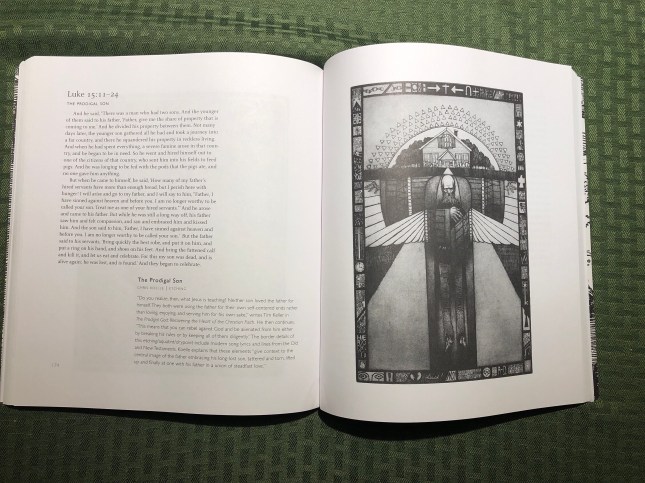
The Prodigal Son — Luke 14:11-24

Luke 15:11-24 NIV
[11] Jesus continued: “There was a man who had two sons. [12] The younger one said to his father, ‘Father, give me my share of the estate.’ So he divided his property between them. [13] “Not long after that, the younger son got together all he had, set off for a distant country and there squandered his wealth in wild living. [14] After he had spent everything, there was a severe famine in that whole country, and he began to be in need. [15] So he went and hired himself out to a citizen of that country, who sent him to his fields to feed pigs. [16] He longed to fill his stomach with the pods that the pigs were eating, but no one gave him anything. [17] “When he came to his senses, he said, ‘How many of my father’s hired servants have food to spare, and here I am starving to death! [18] I will set out and go back to my father and say to him: Father, I have sinned against heaven and against you. [19] I am no longer worthy to be called your son; make me like one of your hired servants.’ [20] So he got up and went to his father. “But while he was still a long way off, his father saw him and was filled with compassion for him; he ran to his son, threw his arms around him and kissed him. [21] “The son said to him, ‘Father, I have sinned against heaven and against you. I am no longer worthy to be called your son.’ [22] “But the father said to his servants, ‘Quick! Bring the best robe and put it on him. Put a ring on his finger and sandals on his feet. [23] Bring the fattened calf and kill it. Let’s have a feast and celebrate. [24] For this son of mine was dead and is alive again; he was lost and is found.’ So they began to celebrate.

Dear God, before I get into this story, I want to do my best to identify all of the art panels, small as they are, in the border of this artwork. Starting at the top left:

  • Broken chains
  • “HOME” or, if you look at it the right way, “LOVE”
  • Two arrows pointing to the cross
  • U-turn
  • Cross
  • “My son was dead and alive again”
  • “He was lost and is found”
  • “!!!!!!!!!!” [kind of cool to have those following the two lines from the father.]
  • “You went after worth [??] and become worthless”
  • Star of David [before a psalm]
  • “Before I formed you in the womb I knew year”
  • “Only remember and be satisfied.” [this seems to be the last of three messages from God to the son.]
  • Three tears
  • A dove [images of God’s forgiveness and of the Holy Spirit before the son’s response]
  • “We believe and we are blessed.”
  • A running figure
  • “If I ascend to heaven you are there. If I make my bed in hell you are there.” [YOU ARE THERE emphasized both times. Interesting that he is bringing the psalms into the son’s thoughts with this and the part about the womb.]
  • Crown
  • “The children the promise [??] as offspring” [couldn’t tell what that third part said, but I think it comes from “The children of the promise are regarded as Abraham’s offspring.”]
  • A key
  • A lock
  • “And I run down that aisle”
  • Musical notes
  • Regular star surrounded by circles [other stars]
  • “[??] mute or deaf or seeing or blind” [I think this is a reference to Exodus 4:11 Exodus 4:11 NIV
    [11] The Lord said to him, “Who gave human beings their mouths? Who makes them deaf or mute? Who gives them sight or makes them blind? Is it not I, the Lord?]
  • Alpha and Omega in Greek letters
  • “The greatest of these is LOVE”
  • Heart with an infinity sign in the middle of it.
  • “Wonderful counselor, almighty God, everlasting father, prince of peace.”
  • “No!”
  • “Please” [If read clockwise, No! is first. If read left to right, please is first.]
  • Broken heart
  • “And I will make a new covenant with you.”
  • “!” [exclamation points on opposite corners of the border]
  • Crying eyes
  • ?? [Can’t tell if this is dove or flame, but I’m pretty sure it is the Holy Spirit either way]
  • “And those he predestined he also justified and those who he called he also justified and those whom he justified he also glorified [Romans 8:30]
  • “And the curtain of the temple was torn in two”
  • Clock pointing to 3:00
  • A cross and I think it says, “Here!!” across it.
  • Arrows all pointing to the middle of the image
  • A heart that says, “Give,” in the middle
  • ??satisfied by the call of others less wild.” [I think I found this reference. It’s from a song called “Wedding Dress” by Derek Webb. The phrase from the song is, “I am so easily satisfied by the call of lovers less wild.” The chorus says, “I’m a prodigal with no way home…” so I’m pretty sure this is the artist’s reference.”] [a second note is that this part about being satisfied is across the image from the part about being “satisfied” on the other side of the border.]
  • “Son you are always with me and all that is mine is yours.”
  • A flower
  • A cross in the middle of something I can quite make out
  • An image of crying eyes that says, “Tears stream down your face,” with an arrow at the bottom of the image pointing upwards and the word, “UP!”

So that takes care of the border. Now what did this artist decide to show me in the image itself?

  • A lot of triangles over the house [I wish I knew if there is a significance to the triangles over the house. A bunch of representations of the Trinity?]
  • The father’s house [It’s a fairly modern representation of a house. I’m surprised it doesn’t have a more prominent front porch.]
  • There are several people cheering
  • The father seems to be represented in motion with arms outspread and then arms around the boy
  • It almost looks like there are angel wings as part of the father’s arms.
  • The boys hair melds into the father’s beard
  • The boy is in modern clothes
  • The boy’s jeans are dirty and the bottoms are frayed.
  • I think the boy is barefoot.
  • The boy’s head is buried in the father’s chest.

What the artist has done to communicate so much through not only the main image, but also through the border is great.

It was about 17 years ago that I sat down and tried to find a father/husband in the Bible who was worth emulating. After looking at all of the men I could find, I ultimately landed on Joseph, Jesus’ earthly father, and the father in this story. Since this is a parable in which the father represents you, I just focused on Joseph. But maybe I should focus on this father since it gives me an insight into you and your nature.

As I look at this story, I notice the part where Jesus says, “Not many days later.” I know this isn’t a real story–it’s a parable–but I wonder what those days between the bequeathing and the leaving would have been like. Was the money not enough for the boy? Did it not bring him the happiness he thought it would.

Ultimately, the story is about the father letting the boy go. That is one of the hardest things to do as a parent. Let them go and then wait. And sometimes we have to wait a long time.

There is a DC Talk song called “The Hard Way” that’s chorus says it all: “Some people gotta learn the hard way. I guess I’m the kind of guy that trying to find out for myself. I had to learn the hard way, Father. I’m on my knees and I’m crying for help.”

Father, for the prodigals out there, make their paths to you as straight as possible. And for the fathers (and mothers), help them to believe.

In Jesus’ name I pray,

Amen


Tags: , , , ,

Luke 10:25-37 – The Good Samaritan’s Perspective

Luke 10:25-37
25 One day an expert in religious law stood up to test Jesus by asking him this question: “Teacher, what should I do to inherit eternal life?”
26 Jesus replied, “What does the law of Moses say? How do you read it?”
27 The man answered, “‘You must love the Lord your God with all your heart, all your soul, all your strength, and all your mind.’ And, ‘Love your neighbor as yourself.’”[c]
28 “Right!” Jesus told him. “Do this and you will live!”
29 The man wanted to justify his actions, so he asked Jesus, “And who is my neighbor?”
30 Jesus replied with a story: “A Jewish man was traveling from Jerusalem down to Jericho, and he was attacked by bandits. They stripped him of his clothes, beat him up, and left him half dead beside the road.
31 “By chance a priest came along. But when he saw the man lying there, he crossed to the other side of the road and passed him by. 32 A Temple assistant[d] walked over and looked at him lying there, but he also passed by on the other side.
33 “Then a despised Samaritan came along, and when he saw the man, he felt compassion for him. 34 Going over to him, the Samaritan soothed his wounds with olive oil and wine and bandaged them. Then he put the man on his own donkey and took him to an inn, where he took care of him. 35 The next day he handed the innkeeper two silver coins,[e] telling him, ‘Take care of this man. If his bill runs higher than this, I’ll pay you the next time I’m here.’
36 “Now which of these three would you say was a neighbor to the man who was attacked by bandits?” Jesus asked.
37 The man replied, “The one who showed him mercy.”
Then Jesus said, “Yes, now go and do the same.”

Dear God, I’m not sure if many people have ever told this story from the Samaritan’s perspective.

—

Once upon a time a Samaritan was walking down a mountain road from Jericho to Jerusalem. He was traveling home to his family in Sychar. Since most of the people on this road were Jewish, if they knew he was a Samaritan they would instantly disdain him, perhaps even calling out insults to him. The best way to survive on this road was to walk with confidence, keep to himself, and even try to come across as a little angry or intimidating.

As he walked, he overheard two men talking. He couldn’t make it all out, but he heard something about a man up the road and they were saying there was nothing they could do. Intrigued, he continued his journey, kind of keeping an eye out for what the two men had seen.

Then he saw the victim. He assumed he was a victim of a crime because he was lying between two boulders with no clothes on. He was bloody and severely injured, but the Samaritan knew someone must have done this to him because of the missing clothes. Surely, no one would have stolen the clothes after this had happened because they would have been too bloody to be desirable.

The Samaritan looked to see if there was anyone else nearby who might help the man, or at least help him help the man. But no one was there. His first thought was to pray. “Father, I don’t know if this man even has a chance of living. Please help him and show me what to do.”

He approached the man and, though he was bloody and beaten, his breathing was strong. It looked like all of his injuries were on the outside. He tried to figure out a way to help the man without touching him because touching him would mean getting bloody and being unclean for days. That would impact how he celebrated the Sabbath. Maybe he could just give the man some clothes and water and let him get himself to Jerusalem. No, the man to too beaten for that. The Sun was too hot and he wouldn’t be able to recover enough on his own. He needed help.

It was only then, as he started to bandage and clothe the man in clothes from the Samaritan’s pack and prepare him to be put up on his donkey that it occurred to him that this man was Jewish. Would he be angry that a Samaritan Was helping him? Would he come to and be angry? Maybe he should clothe him, make him easier for someone else to stop and help, and then move on.

No, this man needed help. The Samaritan put the man on his donkey just as two other travelers walked by. He shook his head as the travelers never made eye contact and obviously went out of their way to ignore him. Then they started to Jerusalem. Luckily for the Samaritan, that was his destination, and, at this point, it was closer than Jericho.

When he got to Jerusalem, he went to three inns before he finally found someone who was willing to deal with both a Samaritan and a man who was nearly dead. They checked into the room and the Samaritan placed the injured man in the bed. He took off the bandages he had placed on the victim out on the road and redressed his wounds. By now, the man was coming around and talking a little, though he was very confused. The Samaritan told him to just rest. Don’t try to talk. Just rest.

They spent the night together, with the Samaritan making a makeshift mattress on the floor while the victim was in the bed. The next morning, the Samaritan had to strike a deal with the innkeeper, who himself seemed to be a good man. “Please care for this man until he is well enough to go out on his own,” he pleaded with the innkeeper. “Here is enough money to cover what it should cost, but I come through Jerusalem often so if it ends up being more, I’ll come back by and settle up with you then.”

The innkeeper agreed and took charge of the victim. With that, the Samaritan packed his things and continued his journey back home to Sychar. As he made his way through the city, he prayed, “Father, please take care of that man. Thank you for keeping him alive and for the provision of an innkeeper who would continue his care. I’m sorry for judging him and so many others like him. I’m sorry for being afraid of him and of you. Thank you for changing my heart through this experience. May my life be a prayer to you. Amen.”

—

In Jesus name I pray,

Amen

 
Leave a comment

Posted by on January 19, 2019 in Luke


Tags: ,

Joseph of Nazareth

Matthew 1:18-25 [NLT]
18 This is how Jesus the Messiah was born. His mother, Mary, was engaged to be married to Joseph. But before the marriage took place, while she was still a virgin, she became pregnant through the power of the Holy Spirit. 19 Joseph, to whom she was engaged, was a righteous man and did not want to disgrace her publicly, so he decided to break the engagement quietly.
20 As he considered this, an angel of the Lord appeared to him in a dream. “Joseph, son of David,” the angel said, “do not be afraid to take Mary as your wife. For the child within her was conceived by the Holy Spirit. 21 And she will have a son, and you are to name him Jesus, for he will save his people from their sins.”
22 All of this occurred to fulfill the Lord’s message through his prophet:
23
“Look! The virgin will conceive a child!
She will give birth to a son,
and they will call him Immanuel,
which means ‘God is with us.’”
24 When Joseph woke up, he did as the angel of the Lord commanded and took Mary as his wife. 25 But he did not have sexual relations with her until her son was born. And Joseph named him Jesus.

Matthew 2:13-15 [NLT]
13 After the wise men were gone, an angel of the Lord appeared to Joseph in a dream. “Get up! Flee to Egypt with the child and his mother,” the angel said. “Stay there until I tell you to return, because Herod is going to search for the child to kill him.”
14 That night Joseph left for Egypt with the child and Mary, his mother, 15 and they stayed there until Herod’s death. This fulfilled what the Lord had spoken through the prophet: “I called my Son out of Egypt.”

Luke 1:26-28 [NLT]
26 In the sixth month of Elizabeth’s pregnancy, God sent the angel Gabriel to Nazareth, a village in Galilee, 27 to a virgin named Mary. She was engaged to be married to a man named Joseph, a descendant of King David. 28 Gabriel appeared to her and said, “Greetings, favored woman! The Lord is with you!”

Luke 2 [NLT]
2 At that time the Roman emperor, Augustus, decreed that a census should be taken throughout the Roman Empire. 2 (This was the first census taken when Quirinius was governor of Syria.) 3 All returned to their own ancestral towns to register for this census. 4 And because Joseph was a descendant of King David, he had to go to Bethlehem in Judea, David’s ancient home. He traveled there from the village of Nazareth in Galilee. 5 He took with him Mary, to whom he was engaged, who was now expecting a child.
6 And while they were there, the time came for her baby to be born. 7 She gave birth to her firstborn son. She wrapped him snugly in strips of cloth and laid him in a manger, because there was no lodging available for them.
The Shepherds and Angels
8 That night there were shepherds staying in the fields nearby, guarding their flocks of sheep. 9 Suddenly, an angel of the Lord appeared among them, and the radiance of the Lord’s glory surrounded them. They were terrified, 10 but the angel reassured them. “Don’t be afraid!” he said. “I bring you good news that will bring great joy to all people. 11 The Savior—yes, the Messiah, the Lord—has been born today in Bethlehem, the city of David! 12 And you will recognize him by this sign: You will find a baby wrapped snugly in strips of cloth, lying in a manger.”
13 Suddenly, the angel was joined by a vast host of others—the armies of heaven—praising God and saying,
14
“Glory to God in highest heaven,
and peace on earth to those with whom God is pleased.”
15 When the angels had returned to heaven, the shepherds said to each other, “Let’s go to Bethlehem! Let’s see this thing that has happened, which the Lord has told us about.”
16 They hurried to the village and found Mary and Joseph. And there was the baby, lying in the manger. 17 After seeing him, the shepherds told everyone what had happened and what the angel had said to them about this child. 18 All who heard the shepherds’ story were astonished, 19 but Mary kept all these things in her heart and thought about them often. 20 The shepherds went back to their flocks, glorifying and praising God for all they had heard and seen. It was just as the angel had told them.
Jesus Is Presented in the Temple
21 Eight days later, when the baby was circumcised, he was named Jesus, the name given him by the angel even before he was conceived.
22 Then it was time for their purification offering, as required by the law of Moses after the birth of a child; so his parents took him to Jerusalem to present him to the Lord. 23 The law of the Lord says, “If a woman’s first child is a boy, he must be dedicated to the Lord.” 24 So they offered the sacrifice required in the law of the Lord—“either a pair of turtledoves or two young pigeons.”
The Prophecy of Simeon
25 At that time there was a man in Jerusalem named Simeon. He was righteous and devout and was eagerly waiting for the Messiah to come and rescue Israel. The Holy Spirit was upon him 26 and had revealed to him that he would not die until he had seen the Lord’s Messiah. 27 That day the Spirit led him to the Temple. So when Mary and Joseph came to present the baby Jesus to the Lord as the law required, 28 Simeon was there. He took the child in his arms and praised God, saying,
29
“Sovereign Lord, now let your servant die in peace,
as you have promised.
30
I have seen your salvation,
31
which you have prepared for all people.
32
He is a light to reveal God to the nations,
and he is the glory of your people Israel!”
33 Jesus’ parents were amazed at what was being said about him. 34 Then Simeon blessed them, and he said to Mary, the baby’s mother, “This child is destined to cause many in Israel to fall, and many others to rise. He has been sent as a sign from God, but many will oppose him. 35 As a result, the deepest thoughts of many hearts will be revealed. And a sword will pierce your very soul.”
The Prophecy of Anna
36 Anna, a prophet, was also there in the Temple. She was the daughter of Phanuel from the tribe of Asher, and she was very old. Her husband died when they had been married only seven years. 37 Then she lived as a widow to the age of eighty-four. She never left the Temple but stayed there day and night, worshiping God with fasting and prayer. 38 She came along just as Simeon was talking with Mary and Joseph, and she began praising God. She talked about the child to everyone who had been waiting expectantly for God to rescue Jerusalem.
39 When Jesus’ parents had fulfilled all the requirements of the law of the Lord, they returned home to Nazareth in Galilee. 40 There the child grew up healthy and strong. He was filled with wisdom, and God’s favor was on him.
Jesus Speaks with the Teachers
41 Every year Jesus’ parents went to Jerusalem for the Passover festival. 42 When Jesus was twelve years old, they attended the festival as usual. 43 After the celebration was over, they started home to Nazareth, but Jesus stayed behind in Jerusalem. His parents didn’t miss him at first, 44 because they assumed he was among the other travelers. But when he didn’t show up that evening, they started looking for him among their relatives and friends.
45 When they couldn’t find him, they went back to Jerusalem to search for him there. 46 Three days later they finally discovered him in the Temple, sitting among the religious teachers, listening to them and asking questions. 47 All who heard him were amazed at his understanding and his answers.
48 His parents didn’t know what to think. “Son,” his mother said to him, “why have you done this to us? Your father and I have been frantic, searching for you everywhere.”
49 “But why did you need to search?” he asked. “Didn’t you know that I must be in my Father’s house?” 50 But they didn’t understand what he meant.
51 Then he returned to Nazareth with them and was obedient to them. And his mother stored all these things in her heart.
52 Jesus grew in wisdom and in stature and in favor with God and all the people.

Dear God, I just love this man. Greatest man of the Bible? I’d put him in the running. Like the Heisman Trophy voting, he might not win the award (that might go to Paul or David), but he would certainly be invited to New York. Why? Because he did all of the little things that don’t show up in the box score (another sports metaphor). He sacrificed his dreams, reputation, and comfort for the call to live a simple, poor yet unbelievably important and critical life. How much of Jesus formation as a human involved watching his earthly father?

Of course, I could go through each part of the story right now, but I’m not going to. I mean, yes, he decided to do the most honorable thing he could think to do BEFORE he got an angel visit in deciding to break with Mary quietly because “he did not want to disgrace her publicly.” He takes the pregnant wife to Bethlehem (it would have been a whole lot easier to go through the census without her being pregnant). He escapes to Egypt with her on the command of an angel. He goes through losing God’s son in Jerusalem later. And no earthly reward for him is ever recorded. Just one life, submitted to you. He lived and he died and history moved on, but the dominoes he was part of knocking over changed the whole world.

So what do I expect of my life? Do I look for greatness? Do I look for importance? Do I look for wealth and comfort? Or do I simply look to you for my sustenance and daily bread? The answer is yes to all. I confess to you that I want people to think I’m great. My ego is huge and I’m sorry for that. I want to be important and get love from people. My insecurity drives me in that way. I want to not have to worry about money and purchase the things my heart desires. My greed and covetousness can be insatiable. And then there are times like this when I repent of this and just look to you for your direction and your daily bread. I remember that you are my provider and my deliverer. You give me what I need and what I need to have to be the most effective part of your plan that I can be.

Father, I would not get invited to New York for the Heisman ceremony like Joseph would, and that’s okay. In fact, it is probably better for me to live the smallest life I can because my ego has a hard time handling any widespread acknowledgment or acclaim. So do with me what you need to do. Use my life to knock over at least one domino in your plan so that your kingdom will come and your will will be done on earth as it is in heaven.

In Jesus’ name I pray,

Amen

[As a P.S. to anyone who might be reading this, here is a link to one of my favorite Christmas songs. It is about Joseph and what it must have been like for him. It’s called “Strange Way to Save the World” and it’s sung by 4Him,]

 
1 Comment

Posted by on December 8, 2018 in Luke, Matthew, Uncategorized


Tags: , , ,