40 When the crowds heard him say this, some of them declared, “Surely this man is the Prophet we’ve been expecting.” 41 Others said, “He is the Messiah.” Still others said, “But he can’t be! Will the Messiah come from Galilee? 42 For the Scriptures clearly state that the Messiah will be born of the royal line of David, in Bethlehem, the village where King David was born.” 43 So the crowd was divided about him. 44 Some even wanted him arrested, but no one laid a hand on him.
45 When the Temple guards returned without having arrested Jesus, the leading priests and Pharisees demanded, “Why didn’t you bring him in?”
46 “We have never heard anyone speak like this!” the guards responded.
47 “Have you been led astray, too?” the Pharisees mocked. 48 “Is there a single one of us rulers or Pharisees who believes in him? 49 This foolish crowd follows him, but they are ignorant of the law. God’s curse is on them!”
50 Then Nicodemus, the leader who had met with Jesus earlier, spoke up. 51 “Is it legal to convict a man before he is given a hearing?” he asked.
52 They replied, “Are you from Galilee, too? Search the Scriptures and see for yourself—no prophet ever comes from Galilee!”
John 7:40-52
Dear God, I am so glad you introduced me to Nicodemus, the born again Pharisee. I say born again because he’s the one who asked Jesus back in chapter 3 about being born again. Given his actions in the rest of John’s telling of the Gospel, I am assuming that he decided to believe in Jesus and be born again.
3 There was a man named Nicodemus, a Jewish religious leader who was a Pharisee. 2 After dark one evening, he came to speak with Jesus. “Rabbi,” he said, “we all know that God has sent you to teach us. Your miraculous signs are evidence that God is with you.”
3 Jesus replied, “I tell you the truth, unless you are born again, you cannot see the Kingdom of God.”
4 “What do you mean?” exclaimed Nicodemus. “How can an old man go back into his mother’s womb and be born again?”
5 Jesus replied, “I assure you, no one can enter the Kingdom of God without being born of water and the Spirit. 6 Humans can reproduce only human life, but the Holy Spirit gives birth to spiritual life. 7 So don’t be surprised when I say, ‘You must be born again.’ 8 The wind blows wherever it wants. Just as you can hear the wind but can’t tell where it comes from or where it is going, so you can’t explain how people are born of the Spirit.”
9 “How are these things possible?” Nicodemus asked.
John 3:1-9
Then in John gives us the most important information we need to know about Nicodemus in chapter 19:
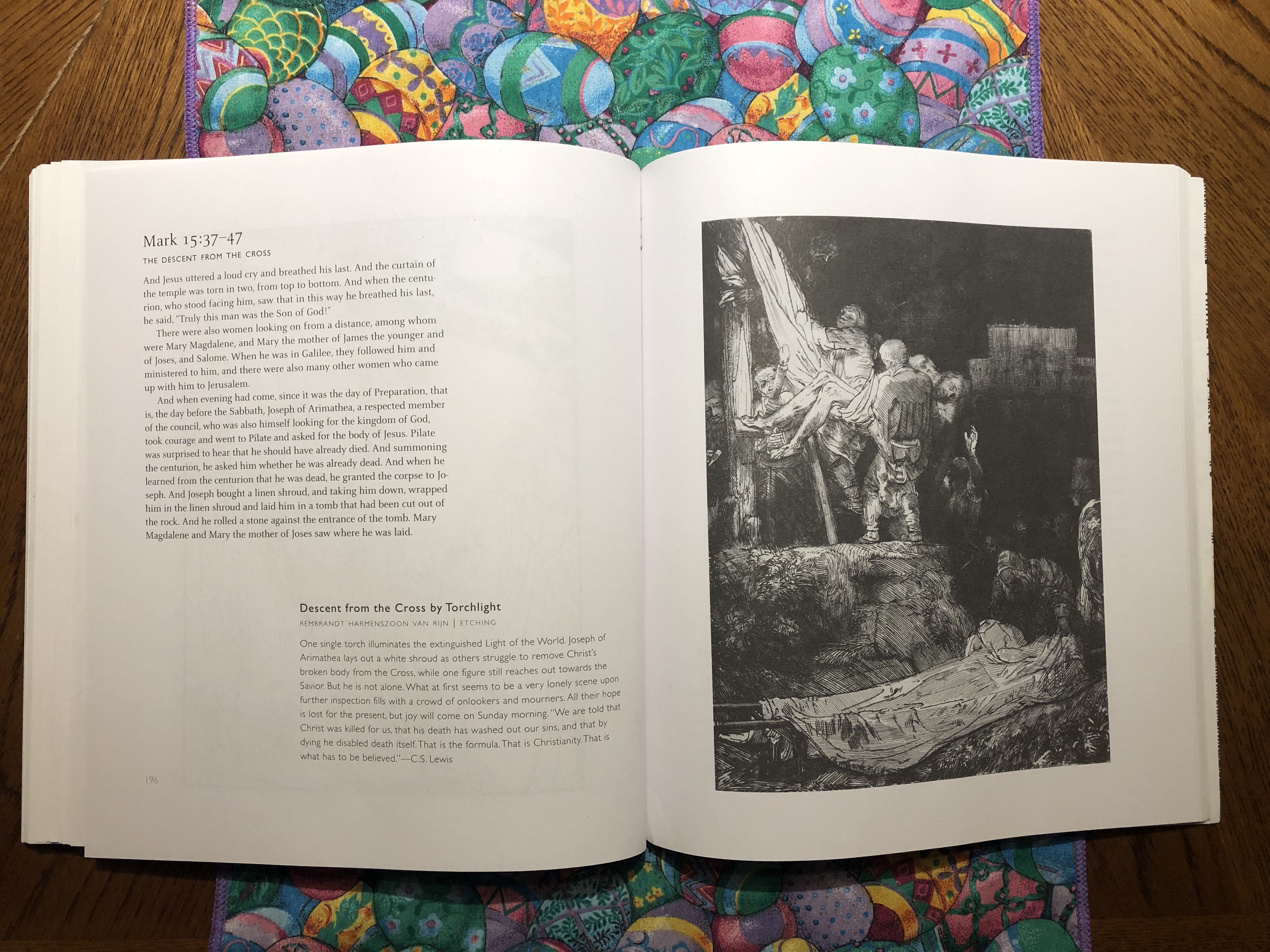
38 Afterward Joseph of Arimathea, who had been a secret disciple of Jesus (because he feared the Jewish leaders), asked Pilate for permission to take down Jesus’ body. When Pilate gave permission, Joseph came and took the body away. 39 With him came Nicodemus, the man who had come to Jesus at night. He brought about seventy-five pounds of perfumed ointment made from myrrh and aloes. 40 Following Jewish burial custom, they wrapped Jesus’ body with the spices in long sheets of linen cloth. 41 The place of crucifixion was near a garden, where there was a new tomb, never used before. 42 And so, because it was the day of preparation for the Jewish Passover and since the tomb was close at hand, they laid Jesus there.
John 19:38-42
[Okay, I have to interrupt this prayer to thank you for what you just gave me through my wife. She came in and told me about a beautiful dream she had last night. It brought good tears to my eyes. They are also tears that reveal the deep pain I have. But it was a good thing. It blessed and comforted me, somewhat. Thank you.]
What I like most about Nicodemus is that he got braver and braver in his belief in Jesus. It starts with him coming to Jesus at night to test the waters. His first words to Jesus are that he believes he’s from God even though he still comes at night so no one will see. I’ve heard it said that it’s hard to get a man to change his mind when his income depends upon him not changing it. Nicodemus was willing to change his mind and risk his income. Because the next story we get is him quasi-defending Jesus in chapter 7, saying he should at least get a chance to defend himself. That was a risk, and he saw how fast they would turn on him: “Are you from Galilee, too?” And finally, when all was lost at the crucifixion and Jesus is dead, it was at that point that he laid it all out there and joined Joseph in caring for Jesus’s dead body. I find this story remarkable because I am guessing it was his righteous anger at what had just happened that caused him to step out because in that moment it looked like Jesus was gone and it had all been for nothing. But I love this guy because it was at that moment that he decided to sacrifice everything for his love for Jesus.
And why do we have these stories. Two out of the three of them only Nicodemus himself could tell. John wasn’t there when he came to Jesus at night. John wasn’t there when he defended Jesus in chapter 7. And John was the only one of the disciples who was there at the crucifixion (that we know of). I think Nicodemus and John became friends and Nicodemus joined The Way after the resurrection. How could he not have?
Father, what am I willing to sacrifice that will cost me everything? Is there anything I need to sacrifice for? Give me eyes to see and ears to hear. Help me to see what you are calling me to do today. Where you are calling me to step out of the shadows and risk it all for you and your calling. I need a discerning heart that can see beyond what is in front of me. I guess I’ll got the Serenity Prayer: Grant me the serenity to accept the things I cannot change, the courage to change the things I can, and the wisdom to know the difference. I’ll just add: And help me to see what you can do through me that is beyond what I think I can do myself.
I pray this in Jesus and with your Holy Spirit,
Amen


 Emails to God