RSS

Mothers of the Bible — Rebekah

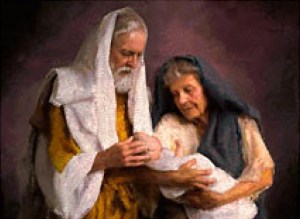
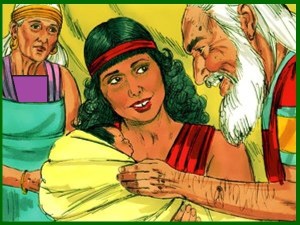
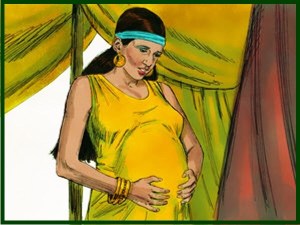
Isaac prayed to the Lord on behalf of his wife, because she was childless. The Lord answered his prayer, and his wife Rebekah became pregnant. The babies jostled each other within her, and she said, “Why is this happening to me?” So she went to inquire of the Lord. The Lord said to her, “Two nations are in your womb, and two peoples from within you will be separated; one people will be stronger than the other, and the older will serve the younger. ” When the time came for her to give birth, there were twin boys in her womb. The first to come out was red, and his whole body was like a hairy garment; so they named him Esau. After this, his brother came out, with his hand grasping Esau’s heel; so he was named Jacob. Isaac was sixty years old when Rebekah gave birth to them. The boys grew up, and Esau became a skillful hunter, a man of the open country, while Jacob was content to stay at home among the tents. Isaac, who had a taste for wild game, loved Esau, but Rebekah loved Jacob.
Genesis 25:21-28

Dear God, I think it’s interesting that you gave Rebekah some insight into her boys while she was still pregnant with them. I mean, it’s not unusual for there to be conflict between to brothers, but the part about two nations and the older will serve the younger. I wonder who she told this to later and when. Did she tell Isaac immediately? Did she tell the boys? She obviously told someone because I just read about it. What in interesting thing to know about your children ahead of time. Did you tell her so that she would be more inclined to meddle in Isaac’s blessing when they were older or to change how she felt about him? I’ve found that you keep me on a need-to-know basis, and I rarely need to know. Apparently, Rebekah needed to know this for your plan. Interesting.

I wonder if Rebekah would have favored Jacob without this prophecy, or would his deceitfulness have driven her crazy. Of course, we will learn that Jacob comes by his own deceitfulness naturally. Both his mother and her brother, Laban, are very deceitful. Perhaps they were more kindred spirits and Esau, although not a great guy, was more straightforward and a what-you-see-is-what-you-get kind of person.

I have to admit that I’ve always judged Rebekah for the role she played in deceiving Isaac. Maybe Isaac was foolish and needed to be deceived. I don’t know. And maybe she wasn’t allowed to plead her case to Isaac or make an argument for favoring Jacob so she felt she had no other choice than deception. It does, however, leave me wondering about her relationship with Esau. Did she love him? Did she “get” him? Did she regret him and wish she had only had Jacob? A hard question for a mom to answer, and one that I suppose she did answer through her actions.

Father, help me to see my own children with your eyes. I don’t think either of them will lead a nation, and there should be no need for competition for power between them. They are living and leading different lives. They each have their own needs. Help me to love each of them well and to give the what you need them to have from me.

In Jesus’s name I pray,

Amen

 
Leave a comment

Posted by on January 5, 2020 in Genesis, Mothers of the Bible


Tags: , , ,

Mothers of the Bible — Sarai/Sarah

“Where is your wife Sarah?” they asked him. “There, in the tent, ” he said. Then one of them said, “I will surely return to you about this time next year, and Sarah your wife will have a son.” Now Sarah was listening at the entrance to the tent, which was behind him. Abraham and Sarah were already very old, and Sarah was past the age of childbearing. So Sarah laughed to herself as she thought, “After I am worn out and my lord is old, will I now have this pleasure?” Then the Lord said to Abraham, “Why did Sarah laugh and say, ‘Will I really have a child, now that I am old?’ Is anything too hard for the Lord? I will return to you at the appointed time next year, and Sarah will have a son.” Sarah was afraid, so she lied and said, “I did not laugh.” But he said, “Yes, you did laugh.”…Now the Lord was gracious to Sarah as he had said, and the Lord did for Sarah what he had promised. Sarah became pregnant and bore a son to Abraham in his old age, at the very time God had promised him. Abraham gave the name Isaac to the son Sarah bore him. When his son Isaac was eight days old, Abraham circumcised him, as God commanded him. Abraham was a hundred years old when his son Isaac was born to him. Sarah said, “God has brought me laughter, and everyone who hears about this will laugh with me.” And she added, “Who would have said to Abraham that Sarah would nurse children? Yet I have borne him a son in his old age.” The child grew and was weaned, and on the day Isaac was weaned Abraham held a great feast. But Sarah saw that the son whom Hagar the Egyptian had borne to Abraham was mocking, and she said to Abraham, “Get rid of that slave woman and her son, for that woman’s son will never share in the inheritance with my son Isaac.”…Sarah lived to be a hundred and twenty-seven years old. She died at Kiriath Arba (that is, Hebron) in the land of Canaan, and Abraham went to mourn for Sarah and to weep over her. Then Abraham rose from beside his dead wife and spoke to the Hittites. He said, “I am a foreigner and stranger among you. Sell me some property for a burial site here so I can bury my dead. ” The Hittites replied to Abraham, “Sir, listen to us. You are a mighty prince among us. Bury your dead in the choicest of our tombs. None of us will refuse you his tomb for burying your dead.”
Genesis 18:9-15, 21:1-10, 23:1-6

Dear God, I’m obviously skipping two major aspects of Sarah’s story this morning, and it’s mainly because I’ve already discussed them when talking about Abraham and Hagar. The first is her suggestion to Abraham that he have a child with Hagar. The other is the fact that Abraham sold her out at least twice (to Pharaoh and Abimelech). Both were terrible decisions on everyone’s part. The really odd part about Abimelech is that it happened when she was older and past childbearing years. She must have been very beautiful.

No, today, I want to focus on her and Isaac. She became pregnant in an improbable way. I’m sure she felt like you would never fulfill your promise to Abraham through her (see Hagar). Like she wasn’t part of the equation and was useless. Then when she hears the prophecy she laughs. Of course she laughs again after Isaac is born. Isaac’s life and just his being brought laughter to her. It’s a reminder to me that there are some things that money cannot buy, but this story is also a reminder to me to not try to be in such control of things. I don’t know what the relationship between Ishmael and Isaac was like, but it seems that the older Ishmael taunting Isaac at the celebration for his weaning was too much for her to bear. Any mother of two children will tell you that the older will tease the younger often. For Abraham, this was just his older son teasing his younger son. But for Sarah, it was totally different. It was the child of that woman teasing her precious child. This was her chance to get rid of both of them, and Sarah took it. I wonder how this served Isaac. How would he have been different if Ishmael had been around while he grew up? We saw that they joined together to bury their father later, so they certainly at least knew of each other. It’s a hard story.

Finally, we get Sarah’s death and burial. I am sure her life did not go as planned. On the one hand, she was rich. She was given to not only Abraham in marriage, but she was beautiful enough to be given in marriage to Pharaoh and Abimelech too. I’m sure that, to a large extent, she felt used–like Abraham’s property. Just one more possession to serve him. We aren’t told about her relationship with you. Did she worship you alongside Abraham? Did you find her special as well? She obviously hoped to be a mother, but gave up on that dream. And then you brought her laughter. I suppose that means she hadn’t had much laughter before that.

Father, I’m not sure what there is to learn from Sarah when it comes to motherhood, but this little focus on her has been a good opportunity to think more about who she was and what we know about what she did and what was done to her. For me, just help me to let go of my expectations and my attempts to plan things. You have been particularly good to me lately and blessed the fruits of my labor. Help me to continue to simply labor as unto you. Help me to serve you through my marriage, my parenting, and my work. Help me to bring a piece of you into the world.

In Jesus’s name I pray,

Amen

 
Leave a comment

Posted by on January 3, 2020 in Genesis, Mothers of the Bible


Tags: , , , , ,

Fathers of the Bible — Abraham and Isaac (Part 2)

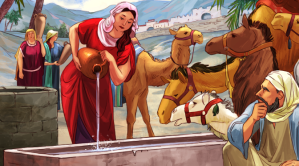
Abraham was now a very old man, and the Lord had blessed him in every way. One day Abraham said to his oldest servant, the man in charge of his household, “Take an oath by putting your hand under my thigh. Swear by the Lord, the God of heaven and earth, that you will not allow my son to marry one of these local Canaanite women. Go instead to my homeland, to my relatives, and find a wife there for my son Isaac.” The servant asked, “But what if I can’t find a young woman who is willing to travel so far from home? Should I then take Isaac there to live among your relatives in the land you came from?” “No!” Abraham responded. “Be careful never to take my son there. For the Lord, the God of heaven, who took me from my father’s house and my native land, solemnly promised to give this land to my descendants. He will send his angel ahead of you, and he will see to it that you find a wife there for my son. If she is unwilling to come back with you, then you are free from this oath of mine. But under no circumstances are you to take my son there.” So the servant took an oath by putting his hand under the thigh of his master, Abraham. He swore to follow Abraham’s instructions. Then he loaded ten of Abraham’s camels with all kinds of expensive gifts from his master, and he traveled to distant Aram-naharaim. There he went to the town where Abraham’s brother Nahor had settled. He made the camels kneel beside a well just outside the town. It was evening, and the women were coming out to draw water. “O Lord, God of my master, Abraham,” he prayed. “Please give me success today, and show unfailing love to my master, Abraham. See, I am standing here beside this spring, and the young women of the town are coming out to draw water. This is my request. I will ask one of them, ‘Please give me a drink from your jug.’ If she says, ‘Yes, have a drink, and I will water your camels, too!’—let her be the one you have selected as Isaac’s wife. This is how I will know that you have shown unfailing love to my master.” Before he had finished praying, he saw a young woman named Rebekah coming out with her water jug on her shoulder. She was the daughter of Bethuel, who was the son of Abraham’s brother Nahor and his wife, Milcah. Rebekah was very beautiful and old enough to be married, but she was still a virgin. She went down to the spring, filled her jug, and came up again. Running over to her, the servant said, “Please give me a little drink of water from your jug.” “Yes, my lord,” she answered, “have a drink.” And she quickly lowered her jug from her shoulder and gave him a drink. When she had given him a drink, she said, “I’ll draw water for your camels, too, until they have had enough to drink.” So she quickly emptied her jug into the watering trough and ran back to the well to draw water for all his camels. The servant watched her in silence, wondering whether or not the Lord had given him success in his mission. Then at last, when the camels had finished drinking, he took out a gold ring for her nose and two large gold bracelets for her wrists. “Whose daughter are you?” he asked. “And please tell me, would your father have any room to put us up for the night?” “I am the daughter of Bethuel,” she replied. “My grandparents are Nahor and Milcah. Yes, we have plenty of straw and feed for the camels, and we have room for guests.” The man bowed low and worshiped the Lord. “Praise the Lord, the God of my master, Abraham,” he said. “The Lord has shown unfailing love and faithfulness to my master, for he has led me straight to my master’s relatives.” The young woman ran home to tell her family everything that had happened. Now Rebekah had a brother named Laban, who ran out to meet the man at the spring. He had seen the nose-ring and the bracelets on his sister’s wrists, and had heard Rebekah tell what the man had said. So he rushed out to the spring, where the man was still standing beside his camels. Laban said to him, “Come and stay with us, you who are blessed by the Lord! Why are you standing here outside the town when I have a room all ready for you and a place prepared for the camels?” So the man went home with Laban, and Laban unloaded the camels, gave him straw for their bedding, fed them, and provided water for the man and the camel drivers to wash their feet. Then food was served. But Abraham’s servant said, “I don’t want to eat until I have told you why I have come.” “All right,” Laban said, “tell us.” “I am Abraham’s servant,” he explained. “And the Lord has greatly blessed my master; he has become a wealthy man. The Lord has given him flocks of sheep and goats, herds of cattle, a fortune in silver and gold, and many male and female servants and camels and donkeys. “When Sarah, my master’s wife, was very old, she gave birth to my master’s son, and my master has given him everything he owns. And my master made me take an oath. He said, ‘Do not allow my son to marry one of these local Canaanite women. Go instead to my father’s house, to my relatives, and find a wife there for my son.’ “But I said to my master, ‘What if I can’t find a young woman who is willing to go back with me?’ He responded, ‘The Lord, in whose presence I have lived, will send his angel with you and will make your mission successful. Yes, you must find a wife for my son from among my relatives, from my father’s family. Then you will have fulfilled your obligation. But if you go to my relatives and they refuse to let her go with you, you will be free from my oath.’ “So today when I came to the spring, I prayed this prayer: ‘O Lord, God of my master, Abraham, please give me success on this mission. See, I am standing here beside this spring. This is my request. When a young woman comes to draw water, I will say to her, “Please give me a little drink of water from your jug.” If she says, “Yes, have a drink, and I will draw water for your camels, too,” let her be the one you have selected to be the wife of my master’s son.’ “Before I had finished praying in my heart, I saw Rebekah coming out with her water jug on her shoulder. She went down to the spring and drew water. So I said to her, ‘Please give me a drink.’ She quickly lowered her jug from her shoulder and said, ‘Yes, have a drink, and I will water your camels, too!’ So I drank, and then she watered the camels. “Then I asked, ‘Whose daughter are you?’ She replied, ‘I am the daughter of Bethuel, and my grandparents are Nahor and Milcah.’ So I put the ring on her nose, and the bracelets on her wrists. “Then I bowed low and worshiped the Lord. I praised the Lord , the God of my master, Abraham, because he had led me straight to my master’s niece to be his son’s wife. So tell me—will you or won’t you show unfailing love and faithfulness to my master? Please tell me yes or no, and then I’ll know what to do next.” Then Laban and Bethuel replied, “The Lord has obviously brought you here, so there is nothing we can say. Here is Rebekah; take her and go. Yes, let her be the wife of your master’s son, as the Lord has directed.” When Abraham’s servant heard their answer, he bowed down to the ground and worshiped the Lord. Then he brought out silver and gold jewelry and clothing and presented them to Rebekah. He also gave expensive presents to her brother and mother. Then they ate their meal, and the servant and the men with him stayed there overnight. But early the next morning, Abraham’s servant said, “Send me back to my master.” “But we want Rebekah to stay with us at least ten days,” her brother and mother said. “Then she can go.” But he said, “Don’t delay me. The Lord has made my mission successful; now send me back so I can return to my master.” “Well,” they said, “we’ll call Rebekah and ask her what she thinks.” So they called Rebekah. “Are you willing to go with this man?” they asked her. And she replied, “Yes, I will go.” So they said good-bye to Rebekah and sent her away with Abraham’s servant and his men. The woman who had been Rebekah’s childhood nurse went along with her. They gave her this blessing as she parted: “Our sister, may you become the mother of many millions! May your descendants be strong and conquer the cities of their enemies.” Then Rebekah and her servant girls mounted the camels and followed the man. So Abraham’s servant took Rebekah and went on his way. Meanwhile, Isaac, whose home was in the Negev, had returned from Beer-lahai-roi. One evening as he was walking and meditating in the fields, he looked up and saw the camels coming. When Rebekah looked up and saw Isaac, she quickly dismounted from her camel. “Who is that man walking through the fields to meet us?” she asked the servant. And he replied, “It is my master.” So Rebekah covered her face with her veil. Then the servant told Isaac everything he had done. And Isaac brought Rebekah into his mother Sarah’s tent, and she became his wife. He loved her deeply, and she was a special comfort to him after the death of his mother.
Genesis 24

Dear God, when comparing this story to the others stories in Genesis, it should probably not be overlooked how much space was given to this one scene. While doing these other stories, I have been struck by how economical the storytelling has been, but this one uses an entire chapter. We meet Rebekah and we meet Laban (whom we will meet later when it’s time for Jacob to marry). But there are two things I noticed about Abraham’s parenting of Isaac in this story:

  1. He wanted Isaac to NOT marry a Canaanite woman, but a woman from the family. He saw that it was important to find someone who would not pull Isaac away from you or the customs of worshipping you. The whole thing about keeping it in the family feels weird to me, but we will assume this wasn’t weird at the time because no one seems to blink an eye at it.
  2. He didn’t want Isaac to leave the area. He didn’t want him to go leave Canaan, but to stay there. I wonder how old Isaac was at this time. I know Sarah was 127 when she died, but I’m not totally sure how they measured years at that point, and I don’t know how old she was when he was born. I know that Abraham was 100 when Isaac was born and died at 175, but, again, I don’t know how long a year was in their time. My point is, at that point he didn’t trust Isaac to make the decisions that Abraham thought best.

So this is really a story, from a parenting perspective, about putting blinders on your child to help guide them. It would be helpful to know Isaac’s age for context, but there are certainly times in raising a child when you put blinders on them, and then there are times when you take them away and let them discover their own boundaries the hard way.

I was talking with someone last night about their granddaughter and the frustrating decisions she is making. The granddaughter is 20 and was only adopted by this woman’s daughter three or four years ago. She has seen a lot. She has lived a more difficult life than I probably ever will. And this grandmother wants to save her from some of the bad decisions she is making right now. As I talked to her, however, it became clear to me that, at this point, the best we can offer as parents or grandparents is a safe place/home base for the adult children as they figure out the boundaries of their lives for themselves. My grandmother once said that you can’t put an old head on young shoulders. So true.

Father, help me to know how to parent my adult children. Help me to know what to do and what not to do. Love them through me. Parent them as you need them to be parented at this stage of their lives through me. Grant me the serenity to accept the things I cannot change, the courage to change the things I can, and the wisdom to know the difference.

In Jesus’s name I pray,

Amen
 
Leave a comment

Posted by on January 2, 2020 in Fathers of the Bible, Genesis


Tags: , , ,

Fathers of the Bible — Abraham and Isaac (Part 1)

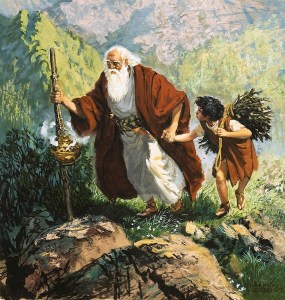
The Lord kept his word and did for Sarah exactly what he had promised. She became pregnant, and she gave birth to a son for Abraham in his old age. This happened at just the time God had said it would. And Abraham named their son Isaac. Eight days after Isaac was born, Abraham circumcised him as God had commanded. Abraham was 100 years old when Isaac was born…When Isaac grew up and was about to be weaned, Abraham prepared a huge feast to celebrate the occasion. But Sarah saw Ishmael—the son of Abraham and her Egyptian servant Hagar—making fun of her son, Isaac. So she turned to Abraham and demanded, “Get rid of that slave woman and her son. He is not going to share the inheritance with my son, Isaac. I won’t have it!” This upset Abraham very much because Ishmael was his son. But God told Abraham, “Do not be upset over the boy and your servant. Do whatever Sarah tells you, for Isaac is the son through whom your descendants will be counted. But I will also make a nation of the descendants of Hagar’s son because he is your son, too.” So Abraham got up early the next morning, prepared food and a container of water, and strapped them on Hagar’s shoulders. Then he sent her away with their son, and she wandered aimlessly in the wilderness of Beersheba…Some time later, God tested Abraham’s faith. “Abraham!” God called. “Yes,” he replied. “Here I am.” “Take your son, your only son—yes, Isaac, whom you love so much—and go to the land of Moriah. Go and sacrifice him as a burnt offering on one of the mountains, which I will show you.” The next morning Abraham got up early. He saddled his donkey and took two of his servants with him, along with his son, Isaac. Then he chopped wood for a fire for a burnt offering and set out for the place God had told him about. On the third day of their journey, Abraham looked up and saw the place in the distance. “Stay here with the donkey,” Abraham told the servants. “The boy and I will travel a little farther. We will worship there, and then we will come right back.” So Abraham placed the wood for the burnt offering on Isaac’s shoulders, while he himself carried the fire and the knife. As the two of them walked on together, Isaac turned to Abraham and said, “Father?” “Yes, my son?” Abraham replied. “We have the fire and the wood,” the boy said, “but where is the sheep for the burnt offering?” “God will provide a sheep for the burnt offering, my son,” Abraham answered. And they both walked on together. When they arrived at the place where God had told him to go, Abraham built an altar and arranged the wood on it. Then he tied his son, Isaac, and laid him on the altar on top of the wood. And Abraham picked up the knife to kill his son as a sacrifice. At that moment the angel of the Lord called to him from heaven, “Abraham! Abraham!” “Yes,” Abraham replied. “Here I am!” “Don’t lay a hand on the boy!” the angel said. “Do not hurt him in any way, for now I know that you truly fear God. You have not withheld from me even your son, your only son.” Then Abraham looked up and saw a ram caught by its horns in a thicket. So he took the ram and sacrificed it as a burnt offering in place of his son. Abraham named the place Yahweh-Yireh (which means “the Lord will provide”). To this day, people still use that name as a proverb: “On the mountain of the Lord it will be provided.” Then the angel of the Lord called again to Abraham from heaven. “This is what the Lord says: Because you have obeyed me and have not withheld even your son, your only son, I swear by my own name that I will certainly bless you. I will multiply your descendants beyond number, like the stars in the sky and the sand on the seashore. Your descendants will conquer the cities of their enemies. And through your descendants all the nations of the earth will be blessed—all because you have obeyed me.” Then they returned to the servants and traveled back to Beersheba, where Abraham continued to live.
Genesis 21:1-5,8-14,22:1-19

Dear God, when I was picking an image for this story I found it hard to pick from the ones that showed Isaac bound on the altar. I cannot imagine what kind of trauma and confusion that must have caused him. From his perspective, his father lied to everyone and had gone crazy. He was old. Was he senile? How was Isaac to know? I am hopeful that you let him in on your conversation with Abraham when you told him to not hurt him and that this was only a test. For Isaac’s sake, I hope you let him hear that. I wonder if Isaac ever told Sarah about it.

I also read somewhere once that Muslims have this same story in their history, but it is Ishmael who is be sacrificed. Of course, I’ll stick with the Isaac version, but, either way, I think the lesson is the same. What kinds of expectations do we, as fathers, put on our children? Do we expect them to carry on our name, accomplish what we never did, etc.? Do we find our fulfillment in them? Do we allow them and their potential to replace you? Is that what Abraham had done?

One thing that is clear through these stories of Abraham is that, while he loved you and worshipped you, he certainly loved himself and his own self-preservation more than being noble. He lied to Pharaoh and Abimelech about Sarah not being his wife so that they wouldn’t hurt him–giving her over to them to be their wife. He listened to Sarah’s suggestion to have a child with Hagar because they were not willing to wait and see how your plan unfolded. He excommunicated Hagar and Ishmael because…well, you apparently told him to do it, but it still seems like he sent them out to die instead of giving them some servants and supplies to ensure their survival. And then you felt the need to test him and break him through this story of having to sacrifice Isaac and the promise he so badly wanted you to keep, that you would make his descendants a great nation.

Father, I don’t know what you are calling me to do, but I pray that everything I do will be without regard to my own benefit. I suppose I need to be even more generous with my time and money because I have found myself being kind of selfish lately. I’ve been leaning towards being materialistic and covetous. I’ve been indifferent to the hardships of others. It’s terrible, I know. I am sorry. Please forgive me.

In Jesus’s name I pray,

Amen

 
Leave a comment

Posted by on January 1, 2020 in Fathers of the Bible, Genesis


Tags: , , , ,

Fathers of the Bible — Abraham (Ishmael)

Now Sarai, Abram’s wife, had not been able to bear children for him. But she had an Egyptian servant named Hagar. So Sarai said to Abram, “The Lord has prevented me from having children. Go and sleep with my servant. Perhaps I can have children through her.” And Abram agreed with Sarai’s proposal. So Sarai, Abram’s wife, took Hagar the Egyptian servant and gave her to Abram as a wife. (This happened ten years after Abram had settled in the land of Canaan.) So Abram had sexual relations with Hagar, and she became pregnant. But when Hagar knew she was pregnant, she began to treat her mistress, Sarai, with contempt. Then Sarai said to Abram, “This is all your fault! I put my servant into your arms, but now that she’s pregnant she treats me with contempt. The Lord will show who’s wrong—you or me!” Abram replied, “Look, she is your servant, so deal with her as you see fit.” Then Sarai treated Hagar so harshly that she finally ran away. The angel of the Lord found Hagar beside a spring of water in the wilderness, along the road to Shur. The angel said to her, “Hagar, Sarai’s servant, where have you come from, and where are you going?” “I’m running away from my mistress, Sarai,” she replied. The angel of the Lord said to her, “Return to your mistress, and submit to her authority.” Then he added, “I will give you more descendants than you can count.” And the angel also said, “You are now pregnant and will give birth to a son. You are to name him Ishmael (which means ‘God hears’), for the Lord has heard your cry of distress. This son of yours will be a wild man, as untamed as a wild donkey! He will raise his fist against everyone, and everyone will be against him. Yes, he will live in open hostility against all his relatives.” Thereafter, Hagar used another name to refer to the Lord, who had spoken to her. She said, “You are the God who sees me.” She also said, “Have I truly seen the One who sees me?” So that well was named Beer-lahai-roi (which means “well of the Living One who sees me”). It can still be found between Kadesh and Bered. So Hagar gave Abram a son, and Abram named him Ishmael. Abram was eighty-six years old when Ishmael was born…When Isaac grew up and was about to be weaned, Abraham prepared a huge feast to celebrate the occasion. But Sarah saw Ishmael—the son of Abraham and her Egyptian servant Hagar—making fun of her son, Isaac. So she turned to Abraham and demanded, “Get rid of that slave woman and her son. He is not going to share the inheritance with my son, Isaac. I won’t have it!” This upset Abraham very much because Ishmael was his son. But God told Abraham, “Do not be upset over the boy and your servant. Do whatever Sarah tells you, for Isaac is the son through whom your descendants will be counted. But I will also make a nation of the descendants of Hagar’s son because he is your son, too.” So Abraham got up early the next morning, prepared food and a container of water, and strapped them on Hagar’s shoulders. Then he sent her away with their son, and she wandered aimlessly in the wilderness of Beersheba.
Genesis 16:1-16,21:8-14

Dear God, there is so much to discuss with Abraham as a father that I thought I would split it into two parts. I’ll look at Ishmael first, and then Isaac.

What a tragedy that this even took place. I have to say that Abraham really didn’t seem to have much regard for women. He gave Sarai/Sarah away to other men twice out of fear for his life (Pharaoh and Abimelech). He took the slave girl as his wife and conscripted her into being the fulfillment of your promise to him. And now he gives into Sarah’s command to send Hagar and Ishmael off into the wilderness with just some water and food. No servants to go help her get established. No camels or livestock. Not real settlement for his wife except marching orders.

So how did all of this make Ishmael feel as a son? Here are some questions:

  • What did it teach him about how he should treat women? I suppose he saw his mother’s love for him. He had to have appreciated who she was. In fact, I would imagine that it was men and Abraham that he had trouble trusting. But much like I think Solomon learned a lack of respect for women from his father, I suspect that what Abraham modeled here wasn’t very helpful to the women who would encounter Ishmael.
  • How did Ishmael respond to his dad? I think it is important to note that Islam tells all of this a little differently. For example, they apparently tell the story of Abraham being tested and willing to sacrifice Isaac with Ishmael in the Isaac role. I don’t know where the truth in that story is, but either way, all of this would have to leave a child with trust issues.
  • Did Ishmael ever get any fatherly love/nurturing from Abraham? None is really recorded. The prophecy over Ishmael is that he will have conflict with others all of his life, but that’s pretty much how he was raised. His mother and Sarah were in conflict. Abraham seemed unable to control the enmity between them. He was probably treated differently by others. When he and him mom were sent away and he almost died, I’m sure it made him bitter. And then the years of struggling in the wilderness while Isaac grew up in what at the time would have been considered luxury. Yeah, I can see where this would have left him bitter and very tough.

I think the big take aways from this thread of Abraham’s story are that we should wait on your timing, and, if we get out ahead of you and make a mistake, we should humbly do our best to pay the price and natural consequences of our actions and not try to mitigate their impact on our personal lives by making them someone else’s problem. Ishmael and Hagar got caught in a pretty bad web. I am sorry for them. I’m also sorry for any times when I’ve given my own children any reason to not trust me. I’m sorry for anything I might have done that shifted the burden of my mistakes/sin from me to anyone else, including them. Please help me to always wait on your timing and to take responsibility for the sins I commit.

In Jesus’s name I pray,

Amen

 
Leave a comment

Posted by on December 31, 2019 in Fathers of the Bible, Genesis


Tags: , , , , ,

Mothers of the Bible — Hagar

Now Sarai, Abram’s wife, had not been able to bear children for him. But she had an Egyptian servant named Hagar. So Sarai said to Abram, “The Lord has prevented me from having children. Go and sleep with my servant. Perhaps I can have children through her.” And Abram agreed with Sarai’s proposal. So Sarai, Abram’s wife, took Hagar the Egyptian servant and gave her to Abram as a wife. (This happened ten years after Abram had settled in the land of Canaan.) So Abram had sexual relations with Hagar, and she became pregnant. But when Hagar knew she was pregnant, she began to treat her mistress, Sarai, with contempt. Then Sarai said to Abram, “This is all your fault! I put my servant into your arms, but now that she’s pregnant she treats me with contempt. The Lord will show who’s wrong—you or me!” Abram replied, “Look, she is your servant, so deal with her as you see fit.” Then Sarai treated Hagar so harshly that she finally ran away. The angel of the Lord found Hagar beside a spring of water in the wilderness, along the road to Shur. The angel said to her, “Hagar, Sarai’s servant, where have you come from, and where are you going?” “I’m running away from my mistress, Sarai,” she replied. The angel of the Lord said to her, “Return to your mistress, and submit to her authority.” Then he added, “I will give you more descendants than you can count.” And the angel also said, “You are now pregnant and will give birth to a son. You are to name him Ishmael (which means ‘God hears’), for the Lord has heard your cry of distress. This son of yours will be a wild man, as untamed as a wild donkey! He will raise his fist against everyone, and everyone will be against him. Yes, he will live in open hostility against all his relatives.” Thereafter, Hagar used another name to refer to the Lord, who had spoken to her. She said, “You are the God who sees me.” She also said, “Have I truly seen the One who sees me?” So that well was named Beer-lahai-roi (which means “well of the Living One who sees me”). It can still be found between Kadesh and Bered. So Hagar gave Abram a son, and Abram named him Ishmael. Abram was eighty-six years old when Ishmael was born. So Abraham said to God, “May Ishmael live under your special blessing!” But God replied, “No—Sarah, your wife, will give birth to a son for you. You will name him Isaac, and I will confirm my covenant with him and his descendants as an everlasting covenant. As for Ishmael, I will bless him also, just as you have asked. I will make him extremely fruitful and multiply his descendants. He will become the father of twelve princes, and I will make him a great nation. But my covenant will be confirmed with Isaac, who will be born to you and Sarah about this time next year.” When God had finished speaking, he left Abraham. On that very day Abraham took his son, Ishmael, and every male in his household, including those born there and those he had bought. Then he circumcised them, cutting off their foreskins, just as God had told him. Abraham was ninety-nine years old when he was circumcised, and Ishmael, his son, was thirteen. Both Abraham and his son, Ishmael, were circumcised on that same day, along with all the other men and boys of the household, whether they were born there or bought as servants. All were circumcised with him. When Isaac grew up and was about to be weaned, Abraham prepared a huge feast to celebrate the occasion. But Sarah saw Ishmael—the son of Abraham and her Egyptian servant Hagar—making fun of her son, Isaac. So she turned to Abraham and demanded, “Get rid of that slave woman and her son. He is not going to share the inheritance with my son, Isaac. I won’t have it!” This upset Abraham very much because Ishmael was his son. But God told Abraham, “Do not be upset over the boy and your servant. Do whatever Sarah tells you, for Isaac is the son through whom your descendants will be counted. But I will also make a nation of the descendants of Hagar’s son because he is your son, too.” So Abraham got up early the next morning, prepared food and a container of water, and strapped them on Hagar’s shoulders. Then he sent her away with their son, and she wandered aimlessly in the wilderness of Beersheba. When the water was gone, she put the boy in the shade of a bush. Then she went and sat down by herself about a hundred yards away. “I don’t want to watch the boy die,” she said, as she burst into tears. But God heard the boy crying, and the angel of God called to Hagar from heaven, “Hagar, what’s wrong? Do not be afraid! God has heard the boy crying as he lies there. Go to him and comfort him, for I will make a great nation from his descendants.” Then God opened Hagar’s eyes, and she saw a well full of water. She quickly filled her water container and gave the boy a drink. And God was with the boy as he grew up in the wilderness. He became a skillful archer, and he settled in the wilderness of Paran. His mother arranged for him to marry a woman from the land of Egypt.
Genesis 16:1-16,17:18-27,21:8-21

Dear God, this was such a difficult situation, and I can’t help but think that Hagar was set up for failure in some ways. Was she mean to Sarai? Maybe. But was she basically trafficked when she was given to Abram as his “wife.” Yeah, maybe. And since I’m looking at parents of the Bible, and, specifically, Hagar, right now, I’ll skip the whole discussion of what a mess Abram created by not waiting on you to fulfill your promise. Right now I want to see what I notice about Hagar in all of this.

  • She was a slave, which, in my mind, is abhorrent. I don’t know that she was given any kind of a choice when it came to having a child with Abram. Of course, in that culture, I don’t know what kind of choice any woman had, including Sarai. But I don’t know that she would have volunteered for this duty.
  • I think she saw her opportunity for advancement when she got pregnant. This was her chance to be treated as more than a slave. This translation says that after Hagar became pregnant she began to treat Sarai with contempt. Well, yeah. And she probably didn’t feel like she should be at the servant level either. I’ve seen employees treat supervisors with contempt when they felt they were mistreated in the workplace. And I’ve see those supervisors get really mad about it. There were a lot of emotions happening here, and I think it’s probably been pretty easy for a lot of people to trash Hagar without maybe seeing this from her perspective.
  • The conflict with Sarai gets to the point where Hagar runs away and it takes an angel visit to get her to go back. If she hadn’t gone back, she and Ishmael (who wasn’t yet born) would likely have died, and you obviously didn’t want Ishmael to die. It also appears that you wanted Hagar as well.
  • She goes back and submits to Sarai (I’m sure that was awkward). Then she has the baby. He grows and then Isaac is born. As there is between any children, there is conflict between Ishmael and Isaac, with Ishmael teasing Isaac. This resulted in Hagar having water and food strapped to her shoulders and being sent away. Man, this seems brutal. As they were dying in the wilderness, Hagar was in despair. But you encouraged her with another angel visit, gave her access to water, and she pressed on in caring for her son.
  • Ultimately, she raised him and arranged for him to marry a woman from the land of Egypt.

This slave girl/woman lived a difficult life and she really had the cards stacked against her, but she was actually very faithful, especially to her son. I think people have probably been unmerciful towards her over the last thousands of years because she was mean to Sarai at the beginning and because she and Ishmael got sent away. But as I read this story, I see a slave forced into pregnancy who loved her child and spent her life trying to provide for him.

Father, thank you for mothers. Thank you that you instituted something within most women that is innate in caring for and loving their children. Yes, sometimes it goes too far. Sometimes it is unhealthy. And sometimes they can’t let go when the time comes. But mothers are such a critical part of the provision you give to us, especially when we are young. Thank you for the instincts you give them to love us so well.

In Jesus’s name I pray,

Amen

 
Leave a comment

Posted by on December 30, 2019 in Genesis, Mothers of the Bible


Tags: , , , , ,

Fathers of the Bible – Noah

The sons of Noah who came out of the boat with their father were Shem, Ham, and Japheth. (Ham is the father of Canaan.) From these three sons of Noah came all the people who now populate the earth. After the flood, Noah began to cultivate the ground, and he planted a vineyard. One day he drank some wine he had made, and he became drunk and lay naked inside his tent. Ham, the father of Canaan, saw that his father was naked and went outside and told his brothers. Then Shem and Japheth took a robe, held it over their shoulders, and backed into the tent to cover their father. As they did this, they looked the other way so they would not see him naked. When Noah woke up from his stupor, he learned what Ham, his youngest son, had done. Then he cursed Canaan, the son of Ham: “May Canaan be cursed! May he be the lowest of servants to his relatives.” Then Noah said, “May the Lord, the God of Shem, be blessed, and may Canaan be his servant! May God expand the territory of Japheth! May Japheth share the prosperity of Shem, and may Canaan be his servant.”
Genesis 9:18-27

Dear God, this has always been a hard story for me. Even when I was a child and I first read it, I’ve never liked it. But for the purposes of this series on motherhood and fatherhood, I think it’s an important story to sit with.

We have a few things happening here. First, there is a passage of time–enough to grow grapes and then ferment them into wine. This obviously wasn’t an immediate process. There was time for them to have struggled together. The struggled through building the ark. They struggled through the experience of the ark. Now, they’ve struggled through the reestablishment of life. Did hard feelings develop over that time?

The thing I see now is Ham relishing in the idea of mocking his father. Knocking him down a peg or two. “Hey, guys. Wanna see dad drunk off his a** and naked on the ground?”

I think most fathers of children after a certain age have felt, at least once, the disdain and bitterness from a child. As much as children might experience rejection at the hands of their father or mother, mothers and fathers have felt rejection from their parents. Sometimes, the division seems insurmountable. I’ve certainly been there. I can see my children, especially when they were teens, enjoying the experience of mocking me and taking me down a peg. And I can see me lashing out in anger as Noah does.

I’ve never liked Noah’s response to Ham. It feels too harsh–especially to Canaan. But as I sit and think about this, what is a good way to hurt the son who’s hurt you? You hurt his son. From a list of Ham’s children later, I’m assuming Canaan wasn’t the oldest because he’s listed last (Genesis 10:6), but maybe he was the youngest and Ham’s favorite at the time. I don’t think this was about poor Canaan. It was about causing Ham as much pain as possible in the moment.

We never really get any resolution to this story. Noah lived another 350 years after the flood. What were those like between Ham and Noah? Canaan and Noah? Canaan and his dad, Ham? Did they ever reconcile? And why did the author give us this story? Was it to explain a superiority of their lineage over the Canaanites?

When it comes to my own life, how do I respond to my children’s disrespect and/or anger? The ugly truth is that the answer is all over the map. Sometimes I’ve actually responded in love. Sometimes I’ve given them the freedom to work through their feelings of me and waited for them to mature and see things (and me) a little differently. Sometimes! Most of the time, unfortunately, I’ve responded as Noah did–impetuous anger. It can be hard to see myself reflected in this story that I’ve never liked.

Father, help me to respect and honor my parents and my wife’s parents (living and dead). Help me to love them with your love. Help me to see them with your eyes. And with my children, help me to patiently love them as they grow. Help me to see myself through their eyes and respond to them in mercy. Help me to reveal your character to them through my responses to them. Draw them closer to yourself. Please don’t let me do anything to get in the way of your plan for them through my own foolishness, selfishness, or insecurity.

In Jesus’s name I pray,

Amen

 
Leave a comment

Posted by on December 28, 2019 in Fathers of the Bible, Genesis


Tags: ,

Fathers of the Bible – Adam

Adam made love to his wife Eve, and she became pregnant and gave birth to Cain. She said, “With the help of the Lord I have brought forth a man.” Later she gave birth to his brother Abel. Now Abel kept flocks, and Cain worked the soil. In the course of time Cain brought some of the fruits of the soil as an offering to the Lord. And Abel also brought an offering—fat portions from some of the firstborn of his flock. The Lord looked with favor on Abel and his offering, but on Cain and his offering he did not look with favor. So Cain was very angry, and his face was downcast. Then the Lord said to Cain, “Why are you angry? Why is your face downcast? If you do what is right, will you not be accepted? But if you do not do what is right, sin is crouching at your door; it desires to have you, but you must rule over it. ” Now Cain said to his brother Abel, “Let’s go out to the field.” While they were in the field, Cain attacked his brother Abel and killed him. Then the Lord said to Cain, “Where is your brother Abel?” “I don’t know, ” he replied. “Am I my brother’s keeper?” The Lord said, “What have you done? Listen! Your brother’s blood cries out to me from the ground. Now you are under a curse and driven from the ground, which opened its mouth to receive your brother’s blood from your hand. When you work the ground, it will no longer yield its crops for you. You will be a restless wanderer on the earth. ” Cain said to the Lord, “My punishment is more than I can bear. Today you are driving me from the land, and I will be hidden from your presence; I will be a restless wanderer on the earth, and whoever finds me will kill me.” But the Lord said to him, “Not so; anyone who kills Cain will suffer vengeance seven times over. ” Then the Lord put a mark on Cain so that no one who found him would kill him. So Cain went out from the Lord’s presence and lived in the land of Nod, east of Eden. Adam made love to his wife again, and she gave birth to a son and named him Seth, saying, “God has granted me another child in place of Abel, since Cain killed him.” Seth also had a son, and he named him Enosh. At that time people began to call on the name of the Lord.
Genesis 4:1-16,25-26

Dear God, same verses as yesterday, but different parent. Adam. We don’t really get that much about either Adam or Eve from these stories. They weren’t the author’s point, I suppose. But they were there. They were talking with each other about their boys. They were talking with you. It’s interesting that the author doesn’t bother to tell us what Adam’s sacrificing habits were like. Did he bring you his best? What kind of an example was he? Assuming he was a good example, was there just only so much he could do to impart his values to his sons?

As a dad, I have so many of my own failings. I would love it if I could only pass on what I consider to be the positive parts of who I am to my children and skip the selfish, carnal parts. And then there is my inability to protect them from the things or the traumas I can’t control. The pain that life can bring.

I try to imagine what it was like for Adam to experience Abel’s loss, respond to Cain and comfort Eve. And then parent Seth in a world where Cain has been exiled. How do you make sense of all of it?

Father, parenting is so much harder than I ever imagined it has pushed, stretched, and even broken me in ways I never thought possible. But in my better moments I remember to bring the broken pieces of my heart to you for you to heal and redeem. Adam needed to feel your redemption for Cain and his actions. He needed to heal. He needed Seth. And he needed Eve. I too need you and my wife and others you out around me. And I need your Spirit. Teach me to be the father you need me to be for my adult children.

In Jesus’s name I pray,

Amen

 
Leave a comment

Posted by on December 27, 2019 in Fathers of the Bible, Genesis


Tags:

Mothers of the Bible — Eve

Now Adam had sexual relations with his wife, Eve, and she became pregnant. When she gave birth to Cain, she said, “With the Lord’s help, I have produced a man!” Later she gave birth to his brother and named him Abel. When they grew up, Abel became a shepherd, while Cain cultivated the ground. When it was time for the harvest, Cain presented some of his crops as a gift to the Lord. Abel also brought a gift—the best portions of the firstborn lambs from his flock. The Lord accepted Abel and his gift, but he did not accept Cain and his gift. This made Cain very angry, and he looked dejected. “Why are you so angry?” the Lord asked Cain. “Why do you look so dejected? You will be accepted if you do what is right. But if you refuse to do what is right, then watch out! Sin is crouching at the door, eager to control you. But you must subdue it and be its master.” One day Cain suggested to his brother, “Let’s go out into the fields.” And while they were in the field, Cain attacked his brother, Abel, and killed him. Afterward the Lord asked Cain, “Where is your brother? Where is Abel?” “I don’t know,” Cain responded. “Am I my brother’s guardian?” But the Lord said, “What have you done? Listen! Your brother’s blood cries out to me from the ground! Now you are cursed and banished from the ground, which has swallowed your brother’s blood. No longer will the ground yield good crops for you, no matter how hard you work! From now on you will be a homeless wanderer on the earth.” Cain replied to the Lord, “My punishment is too great for me to bear! You have banished me from the land and from your presence; you have made me a homeless wanderer. Anyone who finds me will kill me!” The Lord replied, “No, for I will give a sevenfold punishment to anyone who kills you.” Then the Lord put a mark on Cain to warn anyone who might try to kill him. So Cain left the Lord’s presence and settled in the land of Nod, east of Eden.

Adam had sexual relations with his wife again, and she gave birth to another son. She named him Seth, for she said, “God has granted me another son in place of Abel, whom Cain killed.” When Seth grew up, he had a son and named him Enosh. At that time people first began to worship the Lord by name.
Genesis 4:1-16,25-26

Dear God, as I watched the musical Dear Evan Hansen a few days ago, I found myself focusing on the parents. They felt such despair and confusion. The very first song is called, “Anybody Have a Map?”

It made me think about parenting and how few people in the Bible are good role models for us. The I wondered if you don’t have something to teach me by looking at the mothers and fathers of the Bible. Obviously, I can’t look at every single one, but there are certainly some highlights. And it starts with Eve.

I wish we got more about Eve here–or Adam, for that matter. Talk about not having a map! There were no Growing Kids God’s Way or Sacred Parenting books for her to get off of Amazon.com. There weren’t any support groups or Sunday school classes to help teach her. To quote the song, “Anybody Have a Map” that I mentioned above: “I’m flying blind, and I’m making this up as I go.”

I wonder what it was like for he to see her two sons grow up into such different people. And I wonder how old Cain and Abel were when this story happened. Were they teenagers? Did it grieve her to see that Cain held back the best of his crops from God while Abel brought his best? Did she and Adam pray about the boys and talk to you about them? Did she learn some lessons from raising Cain that she applied to Abel? I’ve heard it said that no two children are born to the same parents, and I’m sure that is true for Cain and Abel.

And then one day Cain did it. His jealousy pushed him to kill his own brother. They had possibly never experienced death before. Did Cain understand what would happen? Did he understand that Abel would be gone forever. Did he know that was possible?

As for Eve, how devastated was she? How much a failure did she feel like? Was she inconsolable for a while? The only insight we are given into this is her joy in Seth’s birth and then, presumably, her grandchild’s birth. Cain had children, but we don’t know if Eve ever knew them. Did she ever speak to Cain again? One thing that is interesting to point out is that, according to verse 26, this is when people began to worship you by name. Was this a lesson that Eve learned from her experience? Did she do something different with Seth that taught him to worship you by name?

Father, I suspect that the ultimate theme in this series of mothers (and fathers) of the Bible is that all of them will have made a lot of mistakes, and most will experience tragedy. How foolish are we, then, to think that our mistakes will be small and our tragedies minimal? How foolish am I? So I give all of this to you and ask that you take my best attempts and my worst mistakes and redeem them beyond what they deserve.

In Jesus’s name I pray,

Amen

 
Leave a comment

Posted by on December 26, 2019 in Genesis, Mothers of the Bible


Tags: , , , , ,

“Good Christian Men, Rejoice!”

“Good Christian Men, Rejoice!”

Good Christian men, rejoice
With heart and soul and voice!
Give ye heed to what we say
Jesus Christ is born today
Man and beast before Him bow
And He is in the manger now
Christ is born today
Christ is born today!

Good Christian men, rejoice
With heart and soul and voice!
Now ye hear of endless bliss
Jesus Christ was born for this
He hath opened heaven’s door
And man is blessed forevermore
Christ was born for this
Christ was born for this!

Good Christian men rejoice
With heart and soul and voice!
Now ye need not fear the grave
Jesus Christ was born to save
Calls you one, and calls you all
To gain His everlasting hall
Christ was born to save
Christ was born to save!

Dear God, why are we–why am I–so bad at getting this word out? Christ was born to save! The first verse of this son is just announcing who he is and how we should worship him. The second verse talks about the afterlife and our access to eternity with you through Jesus. And I suppose the third verse does this as well, but I left this song thinking about a sermon by Andy Stanley I listened to yesterday. I have such freedom and peace to tell people about. Why don’t I do it more.

I’ll be getting into this more when I start doing my series on Dear Evan Hansen next week, but there is so much loneliness out there. People feel so isolated. It’s tragic, really. And I’ve been becoming more and more aware of how many elderly are alone and even struggling to care for themselves. Okay, I’m off topic now, but I guess my point is, I don’t see a lot of Christians rejoicing. And I don’t see them selling rejoicing to the world. We tend to sell judgment. We tend to sell rules. We tend to sell guilt or even fear. Why don’t we sell rejoicing?

Father, help me to, first, live out your joy and freedom and, second, to share it with others. There are a lot of needs around me. Grant me the serenity to accept the things I cannot change, the courage to change the things I can, and the wisdom to know the difference. I can’t do it all, and I don’t think I should. But help me to know the role you have for me to make a difference in our community so that, through my life, your kingdom might come and your will might be done on earth as it is in heaven.

In Jesus’s name I pray,

Amen

 
Leave a comment

Posted by on December 25, 2019 in Christmas Hymns, Hymns and Songs


Tags: ,