RSS

Category Archives: Genesis

Fathers of the Bible — Jacob (Part 3)

Jacob lived in the land where his father had stayed, the land of Canaan. This is the account of Jacob’s family line. Joseph, a young man of seventeen, was tending the flocks with his brothers, the sons of Bilhah and the sons of Zilpah, his father’s wives, and he brought their father a bad report about them. Now Israel loved Joseph more than any of his other sons, because he had been born to him in his old age; and he made an ornate robe for him. When his brothers saw that their father loved him more than any of them, they hated him and could not speak a kind word to him. Joseph had a dream, and when he told it to his brothers, they hated him all the more. He said to them, “Listen to this dream I had: We were binding sheaves of grain out in the field when suddenly my sheaf rose and stood upright, while your sheaves gathered around mine and bowed down to it.” His brothers said to him, “Do you intend to reign over us? Will you actually rule us?” And they hated him all the more because of his dream and what he had said. Then he had another dream, and he told it to his brothers. “Listen,” he said, “I had another dream, and this time the sun and moon and eleven stars were bowing down to me.” When he told his father as well as his brothers, his father rebuked him and said, “What is this dream you had? Will your mother and I and your brothers actually come and bow down to the ground before you?” His brothers were jealous of him, but his father kept the matter in mind.
Genesis 37:1-11

Dear God, I intended to go through the whole story until Joseph was sold into slavery and the boys lied to him, but Jacob did made such a terrible parenting decision at the beginning of this passage that I had to stop there.

To show such favoritism among your children and make Jospeh a special coat is a huge parental mistake. Most parents know that. But as I think about it, Jacob had some pretty bad boys and I wonder how much of this was disgust it at least frustration with them. This family of multiple children by multiple mothers was a complicated mess.

Another thing I’m noticing about Jacob is the he only seems to care about his boys’ activities when they threaten him. The only examples I can think of when Jacob admonishes his children are when his Levi and Simeon slaughter the town and he gets mad because now he will be hated and they have to move. And now, at the end of this story, he gets mad at Joseph because Joseph suggested that Jacob (and everyone else) would one day now down to him.

The great thing about this story? Well, it’s nice to see that you were working all of this together for your plan. Jacob’s foolish parenting. Joseph’s arrogance. This is how you would provide for the nation of Israel. And the writer of Genesis recorded it all here for us. If this is how you work, then there is hope for redemption for my foolishness too.

Father, I don’t want to be a foolish parent. I want to instruct my children for the right reasons, not because of how it will reflect on me or my ego. But I also feel some freedom and some hope that you have made your plan John-proof. While you have your best for me, you know all and you will accomplish your plans regardless of my mistakes. Thank you for the peace that comes with that knowledge. Now, please help me to be the father, husband, son, brother, and friend you need me to be, but do it for your glory and not mine.

In Jesus’s name I pray,

Amen

 
Leave a comment

Posted by on January 13, 2020 in Fathers of the Bible, Genesis


Tags: , , ,

Fathers of the Bible — Jacob (Part 2)

Then Jacob traveled on and camped beyond Migdal-eder. While he was living there, Reuben had intercourse with Bilhah, his father’s concubine, and Jacob soon heard about it.
Genesis 35:21-22a

Dear God, It seems that this is a sign of great disrespect that I think we will see repeated later with David and one of his sons. It is fascinating that this is a second story where Jacob is informed of something involving his children, and nothing of his reaction to it is recorded. It’s almost as if this duplicitous liar was also weak when it came to confrontation. First, his daughter, Dinah, is raped and he waits for his sons to take matters into their own hands. Now, his oldest son has sex with his concubine (we won’t get into the wrongness of that), Jacob heard about it, and then nothing.

I think this family culture will play out later when we see that no one was afraid of Jacob when they decided to kill (and ultimately decide to sell into slavery) Joseph. Their father is not respected. Their father seems to be more interested in acquiring for himself than molding a culture if integrity and worship of you among his children and family.

I always wonder if I am tough enough, and I often fear I am not. I tend to avoid conflict. And I remember when my son was 13 and started to test my authority. It was hard, but I remember one instance when he did something that was rude. I can’t tell you I did the right thing in responding to him, but he certainly needed to respect his mother and me more.

I read a book once called Sacred Parenting. It is by Gary Thomas, author of my favorite book that I’ll actually be praying through more this coming week called Sacred Marriage. In Sacred Parenting, Thomas points to all of the lineages that are presented in the Bible and basically says that, ultimately, our purpose is to live, raise children, and then get out of the way. Now that’s simplistic and he didn’t mean that what we do with out lives doesn’t matter, but on a macro level, our lives will likely be forgotten within a couple of generations, but the people we set in motion will be our legacy. Raising those children is more important no less important (and likely more important) than the work I will do because they will be here after I am gone.

Father, I find myself repeating this prayer every day as I pray through these stories, but it bears repeating. Please help me know how to parent my adult children. Give them what they need through me. Show my wife as well. Unite us completely together in how we approach them so that they will be able to be the parents they need to be one day. And do all of this for your glory and not ours. I will be forgotten, but you will never die. You are I am. May all of that I do end up, if even accidentally, help to bring about your glory.

In Jesus’s name I pray,

Amen

 
Leave a comment

Posted by on January 12, 2020 in Fathers of the Bible, Genesis


Tags: ,

Fathers of the Bible — Jacob (Part 1: Jacob & Dinah)

Now Dinah, the daughter Leah had borne to Jacob, went out to visit the women of the land. When Shechem son of Hamor the Hivite, the ruler of that area, saw her, he took her and raped her. His heart was drawn to Dinah daughter of Jacob; he loved the young woman and spoke tenderly to her. And Shechem said to his father Hamor, “Get me this girl as my wife.” When Jacob heard that his daughter Dinah had been defiled, his sons were in the fields with his livestock; so he did nothing about it until they came home. Then Shechem’s father Hamor went out to talk with Jacob. Meanwhile, Jacob’s sons had come in from the fields as soon as they heard what had happened. They were shocked and furious, because Shechem had done an outrageous thing in Israel by sleeping with Jacob’s daughter—a thing that should not be done. But Hamor said to them, “My son Shechem has his heart set on your daughter. Please give her to him as his wife. Intermarry with us; give us your daughters and take our daughters for yourselves. You can settle among us; the land is open to you. Live in it, trade in it, and acquire property in it. ” Then Shechem said to Dinah’s father and brothers, “Let me find favor in your eyes, and I will give you whatever you ask. Make the price for the bride and the gift I am to bring as great as you like, and I’ll pay whatever you ask me. Only give me the young woman as my wife.” Because their sister Dinah had been defiled, Jacob’s sons replied deceitfully as they spoke to Shechem and his father Hamor. They said to them, “We can’t do such a thing; we can’t give our sister to a man who is not circumcised. That would be a disgrace to us. We will enter into an agreement with you on one condition only: that you become like us by circumcising all your males. Then we will give you our daughters and take your daughters for ourselves. We’ll settle among you and become one people with you. But if you will not agree to be circumcised, we’ll take our sister and go.” Their proposal seemed good to Hamor and his son Shechem. The young man, who was the most honored of all his father’s family, lost no time in doing what they said, because he was delighted with Jacob’s daughter. So Hamor and his son Shechem went to the gate of their city to speak to the men of their city. “These men are friendly toward us,” they said. “Let them live in our land and trade in it; the land has plenty of room for them. We can marry their daughters and they can marry ours. But the men will agree to live with us as one people only on the condition that our males be circumcised, as they themselves are. Won’t their livestock, their property and all their other animals become ours? So let us agree to their terms, and they will settle among us. ” All the men who went out of the city gate agreed with Hamor and his son Shechem, and every male in the city was circumcised. Three days later, while all of them were still in pain, two of Jacob’s sons, Simeon and Levi, Dinah’s brothers, took their swords and attacked the unsuspecting city, killing every male. They put Hamor and his son Shechem to the sword and took Dinah from Shechem’s house and left. The sons of Jacob came upon the dead bodies and looted the city where their sister had been defiled. They seized their flocks and herds and donkeys and everything else of theirs in the city and out in the fields. They carried off all their wealth and all their women and children, taking as plunder everything in the houses. Then Jacob said to Simeon and Levi, “You have brought trouble on me by making me obnoxious to the Canaanites and Perizzites, the people living in this land. We are few in number, and if they join forces against me and attack me, I and my household will be destroyed.” But they replied, “Should he have treated our sister like a prostitute? ”
Genesis 34

Dear God, there are so many stories of Jacob as a father, I’m going to have to break them up into vignettes.

This is another Old Testament story of a father not responding to the rape of his daughter. I’m sure I’ll pray about David’s experience as well. But in this case, I’m going to talk about Jacob.

It’s interesting that the author is careful to give us only certain details. First, why tell this story except to give an explanation of why Jacob’ family ended up settling in Bethel (chapter 35)? Maybe he also wanted us to know that the deceit runs in the family. From Rebekah and Laban’s generations, to Jacob’s, Leah’s and Rachel’s, and now to his sons. Lying and deceit came pretty easily to all of these people.

I also wonder how much of the sons’ solution was based around defending their sister and how much was about killing the men and plundering the city. I mean, they repaid a heinous crime with a vengeance that was really over the top.

Finally, while Jacob never lied about his wives and said they were his sisters (as did both his grandfather Abraham and his father Isaac), but he certainly didn’t seem too upset about what happened to Dinah. I guess it is hard for me to figure out the context of all of this in a real way because it is just hard for me to put myself in the skin of these men and how they felt about the value of a woman–even their own daughter/sister.

What I do get told to me explicitly is that Levi and Simeon, specifically, took the lead on avenging their sister’s rape, they took it to an extreme and profited from their revenge, including taking women and children who weren’t theirs, and their father was concerned to the point where, at your direction, he relocated them to Bethel. I suppose I can also surmise that Jacob’s lack of leadership in response to Dinah’s rape left the door open for his sons to really go over the top and indulge their own vices and selfishness as well.

Father, reveal to me any ways in which I wrongly abdicate my responsibilities as a father, husband, supervisor, etc. Give me the courage to confront when I need to confront and do what you need me to do. In fact, as I sit here now, I can think of a couple of areas that require me to step in and lead with your love and your compassion. Help me to do it and prepare the path before me.

In Jesus’s name I pray,

Amen

 
Leave a comment

Posted by on January 9, 2020 in Fathers of the Bible, Genesis


Tags: , , ,

Fathers of the Bible – Laban

As soon as Laban heard the news about Jacob, his sister’s son, he hurried to meet him. He embraced him and kissed him and brought him to his home, and there Jacob told him all these things. Then Laban said to him, “You are my own flesh and blood.” After Jacob had stayed with him for a whole month, Laban said to him, “Just because you are a relative of mine, should you work for me for nothing? Tell me what your wages should be.” Now Laban had two daughters; the name of the older was Leah, and the name of the younger was Rachel. Leah had weak eyes, but Rachel had a lovely figure and was beautiful. Jacob was in love with Rachel and said, “I’ll work for you seven years in return for your younger daughter Rachel.” Laban said, “It’s better that I give her to you than to some other man. Stay here with me.” So Jacob served seven years to get Rachel, but they seemed like only a few days to him because of his love for her. Then Jacob said to Laban, “Give me my wife. My time is completed, and I want to make love to her. ” So Laban brought together all the people of the place and gave a feast. But when evening came, he took his daughter Leah and brought her to Jacob, and Jacob made love to her. And Laban gave his servant Zilpah to his daughter as her attendant. When morning came, there was Leah! So Jacob said to Laban, “What is this you have done to me? I served you for Rachel, didn’t I? Why have you deceived me? ” Laban replied, “It is not our custom here to give the younger daughter in marriage before the older one. Finish this daughter’s bridal week; then we will give you the younger one also, in return for another seven years of work. ” And Jacob did so. He finished the week with Leah, and then Laban gave him his daughter Rachel to be his wife. Laban gave his servant Bilhah to his daughter Rachel as her attendant. Jacob made love to Rachel also, and his love for Rachel was greater than his love for Leah. And he worked for Laban another seven years. After Rachel gave birth to Joseph, Jacob said to Laban, “Send me on my way so I can go back to my own homeland. Give me my wives and children, for whom I have served you, and I will be on my way. You know how much work I’ve done for you.” But Laban said to him, “If I have found favor in your eyes, please stay. I have learned by divination that the Lord has blessed me because of you.” He added, “Name your wages, and I will pay them.” Jacob heard that Laban’s sons were saying, “Jacob has taken everything our father owned and has gained all this wealth from what belonged to our father.” And Jacob noticed that Laban’s attitude toward him was not what it had been. Then the Lord said to Jacob, “Go back to the land of your fathers and to your relatives, and I will be with you.” So Jacob sent word to Rachel and Leah to come out to the fields where his flocks were. He said to them, “I see that your father’s attitude toward me is not what it was before, but the God of my father has been with me. You know that I’ve worked for your father with all my strength, yet your father has cheated me by changing my wages ten times. However, God has not allowed him to harm me. If he said, ‘The speckled ones will be your wages,’ then all the flocks gave birth to speckled young; and if he said, ‘The streaked ones will be your wages,’ then all the flocks bore streaked young. So God has taken away your father’s livestock and has given them to me. Then Rachel and Leah replied, “Do we still have any share in the inheritance of our father’s estate? Does he not regard us as foreigners? Not only has he sold us, but he has used up what was paid for us. Surely all the wealth that God took away from our father belongs to us and our children. So do whatever God has told you.” Then Jacob put his children and his wives on camels, and he drove all his livestock ahead of him, along with all the goods he had accumulated in Paddan Aram, to go to his father Isaac in the land of Canaan. When Laban had gone to shear his sheep, Rachel stole her father’s household gods. Moreover, Jacob deceived Laban the Aramean by not telling him he was running away. So he fled with all he had, crossed the Euphrates River, and headed for the hill country of Gilead. On the third day Laban was told that Jacob had fled. Taking his relatives with him, he pursued Jacob for seven days and caught up with him in the hill country of Gilead. Then God came to Laban the Aramean in a dream at night and said to him, “Be careful not to say anything to Jacob, either good or bad.” Jacob had pitched his tent in the hill country of Gilead when Laban overtook him, and Laban and his relatives camped there too. Then Laban said to Jacob, “What have you done? You’ve deceived me, and you’ve carried off my daughters like captives in war. Why did you run off secretly and deceive me? Why didn’t you tell me, so I could send you away with joy and singing to the music of timbrels and harps? You didn’t even let me kiss my grandchildren and my daughters goodbye. You have done a foolish thing. I have the power to harm you; but last night the God of your father said to me, ‘Be careful not to say anything to Jacob, either good or bad.’ Now you have gone off because you longed to return to your father’s household. But why did you steal my gods? ” Jacob answered Laban, “I was afraid, because I thought you would take your daughters away from me by force. But if you find anyone who has your gods, that person shall not live. In the presence of our relatives, see for yourself whether there is anything of yours here with me; and if so, take it.” Now Jacob did not know that Rachel had stolen the gods. So Laban went into Jacob’s tent and into Leah’s tent and into the tent of the two female servants, but he found nothing. After he came out of Leah’s tent, he entered Rachel’s tent. Now Rachel had taken the household gods and put them inside her camel’s saddle and was sitting on them. Laban searched through everything in the tent but found nothing. Rachel said to her father, “Don’t be angry, my lord, that I cannot stand up in your presence; I’m having my period. ” So he searched but could not find the household gods. Jacob was angry and took Laban to task. “What is my crime?” he asked Laban. “How have I wronged you that you hunt me down? Now that you have searched through all my goods, what have you found that belongs to your household? Put it here in front of your relatives and mine, and let them judge between the two of us. “I have been with you for twenty years now. Your sheep and goats have not miscarried, nor have I eaten rams from your flocks. I did not bring you animals torn by wild beasts; I bore the loss myself. And you demanded payment from me for whatever was stolen by day or night. This was my situation: The heat consumed me in the daytime and the cold at night, and sleep fled from my eyes. It was like this for the twenty years I was in your household. I worked for you fourteen years for your two daughters and six years for your flocks, and you changed my wages ten times. If the God of my father, the God of Abraham and the Fear of Isaac, had not been with me, you would surely have sent me away empty-handed. But God has seen my hardship and the toil of my hands, and last night he rebuked you. ” Laban answered Jacob, “The women are my daughters, the children are my children, and the flocks are my flocks. All you see is mine. Yet what can I do today about these daughters of mine, or about the children they have borne? Come now, let’s make a covenant, you and I, and let it serve as a witness between us.” So Jacob took a stone and set it up as a pillar. He said to his relatives, “Gather some stones.” So they took stones and piled them in a heap, and they ate there by the heap. Laban called it Jegar Sahadutha, and Jacob called it Galeed. Laban said, “This heap is a witness between you and me today.” That is why it was called Galeed. It was also called Mizpah, because he said, “May the Lord keep watch between you and me when we are away from each other. If you mistreat my daughters or if you take any wives besides my daughters, even though no one is with us, remember that God is a witness between you and me.” Laban also said to Jacob, “Here is this heap, and here is this pillar I have set up between you and me. This heap is a witness, and this pillar is a witness, that I will not go past this heap to your side to harm you and that you will not go past this heap and pillar to my side to harm me. May the God of Abraham and the God of Nahor, the God of their father, judge between us.” So Jacob took an oath in the name of the Fear of his father Isaac. He offered a sacrifice there in the hill country and invited his relatives to a meal. After they had eaten, they spent the night there. Early the next morning Laban kissed his grandchildren and his daughters and blessed them. Then he left and returned home.
Genesis 29:13-30,30:25-28,31:1-9,14-55

Dear God, I sat down to do this yesterday and I got stuck because I was going to do Jacob. The stores of him as a father are so many that I wasn’t sure how to proceed. I gave up, but then last night I realized I had skipped a pretty influential father from Genesis–Laban.

Laban and his sister, Rebekah, Jacob’s mother, were pretty deceitful people. Rebekah was willing to tell Isaac anything to get her way and Laban proved to be a similar person with Jacob. He knew he would never marry off Leah so he pulled the old switcharoo. What’s interesting is how this family trait seems to filter down by generations with Rachel stealing his gods and lying about it.

So what should Laban have done with Leah? Should he have made the honest bargain up front? And how did all of this impact both Leah and Rachel? Well, the jealousy is easy enough to see. But Leah must have always carried around an insecurity because she knew she was Jacob’s second choice to her beautiful sister. And then there was the business of having their servants sleep with Jacob to have more children. Just weird. I have to tell you, this is a really weird way to build a nation of your chosen people. I don’t see anyone here who is really worth choosing.

So Laban and Rebekah had a family culture of deceit. Rachel perpetuated it to some extent. And every woman in the story felt insecure and jealous. What would their lives have been like with some simplicity and honesty? And if they had done it right, would your plan have played out?

Father, like I said, all of these people are interesting and I can’t say that I would choose any of them as my people if I were you. But I’m not you. I think the theme of all of these parent stories from the Bible is that all of them were pretty bad parents. But somehow your plan allows for that. So I can perhaps take a little of the pressure off of myself and simply throw myself at your feet in worship. I will just have to trust that you have made your plan “John proof.”

In Jesus’s name I pray,

Amen

 
Leave a comment

Posted by on January 8, 2020 in Fathers of the Bible, Genesis


Tags: , , ,

Fathers of the Bible — Isaac

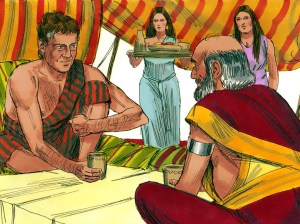
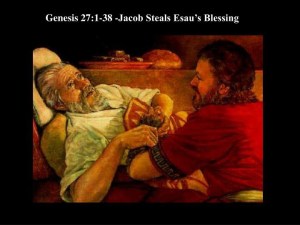
This is the account of the family line of Abraham’s son Isaac. Abraham became the father of Isaac, and Isaac was forty years old when he married Rebekah daughter of Bethuel the Aramean from Paddan Aram and sister of Laban the Aramean. Isaac prayed to the Lord on behalf of his wife, because she was childless. The Lord answered his prayer, and his wife Rebekah became pregnant. The boys grew up, and Esau became a skillful hunter, a man of the open country, while Jacob was content to stay at home among the tents. Isaac, who had a taste for wild game, loved Esau, but Rebekah loved Jacob. When Esau was forty years old, he married Judith daughter of Beeri the Hittite, and also Basemath daughter of Elon the Hittite. They were a source of grief to Isaac and Rebekah. When Isaac was old and his eyes were so weak that he could no longer see, he called for Esau his older son and said to him, “My son.” “Here I am,” he answered. Isaac said, “I am now an old man and don’t know the day of my death. Now then, get your equipment—your quiver and bow—and go out to the open country to hunt some wild game for me. Prepare me the kind of tasty food I like and bring it to me to eat, so that I may give you my blessing before I die.” Now Rebekah was listening as Isaac spoke to his son Esau. When Esau left for the open country to hunt game and bring it back, Rebekah said to her son Jacob, “Look, I overheard your father say to your brother Esau, ‘Bring me some game and prepare me some tasty food to eat, so that I may give you my blessing in the presence of the Lord before I die.’ Now, my son, listen carefully and do what I tell you: Go out to the flock and bring me two choice young goats, so I can prepare some tasty food for your father, just the way he likes it. Then take it to your father to eat, so that he may give you his blessing before he dies.” Jacob said to Rebekah his mother, “But my brother Esau is a hairy man while I have smooth skin. What if my father touches me? I would appear to be tricking him and would bring down a curse on myself rather than a blessing.” His mother said to him, “My son, let the curse fall on me. Just do what I say; go and get them for me.” So he went and got them and brought them to his mother, and she prepared some tasty food, just the way his father liked it. Then Rebekah took the best clothes of Esau her older son, which she had in the house, and put them on her younger son Jacob. She also covered his hands and the smooth part of his neck with the goatskins. Then she handed to her son Jacob the tasty food and the bread she had made. He went to his father and said, “My father.” “Yes, my son,” he answered. “Who is it?” Jacob said to his father, “I am Esau your firstborn. I have done as you told me. Please sit up and eat some of my game, so that you may give me your blessing.” Isaac asked his son, “How did you find it so quickly, my son?” “The Lord your God gave me success, ” he replied. Then Isaac said to Jacob, “Come near so I can touch you, my son, to know whether you really are my son Esau or not.” Jacob went close to his father Isaac, who touched him and said, “The voice is the voice of Jacob, but the hands are the hands of Esau.” He did not recognize him, for his hands were hairy like those of his brother Esau; so he proceeded to bless him. “Are you really my son Esau?” he asked. “I am,” he replied. Then he said, “My son, bring me some of your game to eat, so that I may give you my blessing.” Jacob brought it to him and he ate; and he brought some wine and he drank. Then his father Isaac said to him, “Come here, my son, and kiss me.” So he went to him and kissed him. When Isaac caught the smell of his clothes, he blessed him and said, “Ah, the smell of my son is like the smell of a field that the Lord has blessed. May God give you heaven’s dew and earth’s richness — an abundance of grain and new wine. May nations serve you and peoples bow down to you. Be lord over your brothers, and may the sons of your mother bow down to you. May those who curse you be cursed and those who bless you be blessed. ” After Isaac finished blessing him, and Jacob had scarcely left his father’s presence, his brother Esau came in from hunting. He too prepared some tasty food and brought it to his father. Then he said to him, “My father, please sit up and eat some of my game, so that you may give me your blessing.” His father Isaac asked him, “Who are you?” “I am your son,” he answered, “your firstborn, Esau. ” Isaac trembled violently and said, “Who was it, then, that hunted game and brought it to me? I ate it just before you came and I blessed him—and indeed he will be blessed! ” When Esau heard his father’s words, he burst out with a loud and bitter cry and said to his father, “Bless me—me too, my father!” But he said, “Your brother came deceitfully and took your blessing.” Esau said, “Isn’t he rightly named Jacob? This is the second time he has taken advantage of me: He took my birthright, and now he’s taken my blessing!” Then he asked, “Haven’t you reserved any blessing for me?” Isaac answered Esau, “I have made him lord over you and have made all his relatives his servants, and I have sustained him with grain and new wine. So what can I possibly do for you, my son?” Esau said to his father, “Do you have only one blessing, my father? Bless me too, my father!” Then Esau wept aloud. His father Isaac answered him, “Your dwelling will be away from the earth’s richness, away from the dew of heaven above. You will live by the sword and you will serve your brother. But when you grow restless, you will throw his yoke from off your neck. ” Esau held a grudge against Jacob because of the blessing his father had given him. He said to himself, “The days of mourning for my father are near; then I will kill my brother Jacob.” When Rebekah was told what her older son Esau had said, she sent for her younger son Jacob and said to him, “Your brother Esau is planning to avenge himself by killing you. Now then, my son, do what I say: Flee at once to my brother Laban in Harran. Stay with him for a while until your brother’s fury subsides. When your brother is no longer angry with you and forgets what you did to him, I’ll send word for you to come back from there. Why should I lose both of you in one day?” Then Rebekah said to Isaac, “I’m disgusted with living because of these Hittite women. If Jacob takes a wife from among the women of this land, from Hittite women like these, my life will not be worth living.” So Isaac called for Jacob and blessed him. Then he commanded him: “Do not marry a Canaanite woman. Go at once to Paddan Aram, to the house of your mother’s father Bethuel. Take a wife for yourself there, from among the daughters of Laban, your mother’s brother. May God Almighty bless you and make you fruitful and increase your numbers until you become a community of peoples. May he give you and your descendants the blessing given to Abraham, so that you may take possession of the land where you now reside as a foreigner, the land God gave to Abraham.” Then Isaac sent Jacob on his way, and he went to Paddan Aram, to Laban son of Bethuel the Aramean, the brother of Rebekah, who was the mother of Jacob and Esau. Now Esau learned that Isaac had blessed Jacob and had sent him to Paddan Aram to take a wife from there, and that when he blessed him he commanded him, “Do not marry a Canaanite woman,” and that Jacob had obeyed his father and mother and had gone to Paddan Aram. Esau then realized how displeasing the Canaanite women were to his father Isaac; so he went to Ishmael and married Mahalath, the sister of Nebaioth and daughter of Ishmael son of Abraham, in addition to the wives he already had.
Genesis 25:19-21,27-28,26:34-28:9

Dear God, I don’t know enough about these boys to judge what Isaac and Rebekah did here. Just how bad were these two wives of Esau? Just how difficult was Esau? On the other side, Jacob seems spoiled and soft. Was he really worthy of the blessing. And then you have the prophecy given to Rebekah about the boys. Did Jacob have a special place in her heart from that?

As for focusing on Isaac, there are a couple of remarkable things here. First, Esau seemed to make him more proud from a manly standpoint. The boy can hunt and be tough. The other likes to stay home. I wonder if you considered that Jacob was spoiled because his time with Laban later certainly taught him hard work. He learned how to get out beyond the tents. He learned to suffer.

I talked with my sister recently about our children suffering and how hard it can be to allow it. But the struggle is what teaches us. The struggle is what makes us stronger. Yet, as parents, we tend to short circuit those lessons by intervening to make things easier. I wonder how much Isaac might have done that for Jacob.

I also think it is interesting to see how much Rebekah manipulated and lied to Isaac. She not only participated in the blessing deception, but she also lied to Isaac about why they should send Jacob to Laban (or she at the least didn’t tell him the entire reason). Was Isaac too old to make that kind of judgment? Would Isaac have said that Jacob needs to face his brother and Rebekah didn’t want him to?

Father, parenting has never been easy and it never will be. We just don’t know how to respond to these people that walk around with free will. They are the products of our parenting and examples (good and bad), life circumstances that they witness and experience, and then that strange internal structure that causes them to respond to all of this in the way that only they will. And our job is to somehow guide them into being the best possible version of themselves. Through that lens, it seems impossible. So help me to see what I really need to be doing with and for my children and what I need to not do. Be with them in ways I cannot. And help me to continue to grow into the man, husband, and father you need me to be.

In Jesus’s name I pray,

Amen

 
Leave a comment

Posted by on January 6, 2020 in Fathers of the Bible, Genesis


Tags: , , ,

Mothers of the Bible — Rebekah

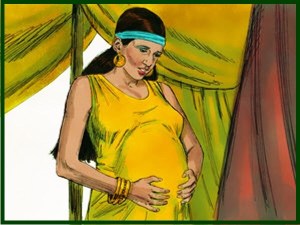
Isaac prayed to the Lord on behalf of his wife, because she was childless. The Lord answered his prayer, and his wife Rebekah became pregnant. The babies jostled each other within her, and she said, “Why is this happening to me?” So she went to inquire of the Lord. The Lord said to her, “Two nations are in your womb, and two peoples from within you will be separated; one people will be stronger than the other, and the older will serve the younger. ” When the time came for her to give birth, there were twin boys in her womb. The first to come out was red, and his whole body was like a hairy garment; so they named him Esau. After this, his brother came out, with his hand grasping Esau’s heel; so he was named Jacob. Isaac was sixty years old when Rebekah gave birth to them. The boys grew up, and Esau became a skillful hunter, a man of the open country, while Jacob was content to stay at home among the tents. Isaac, who had a taste for wild game, loved Esau, but Rebekah loved Jacob.
Genesis 25:21-28

Dear God, I think it’s interesting that you gave Rebekah some insight into her boys while she was still pregnant with them. I mean, it’s not unusual for there to be conflict between to brothers, but the part about two nations and the older will serve the younger. I wonder who she told this to later and when. Did she tell Isaac immediately? Did she tell the boys? She obviously told someone because I just read about it. What in interesting thing to know about your children ahead of time. Did you tell her so that she would be more inclined to meddle in Isaac’s blessing when they were older or to change how she felt about him? I’ve found that you keep me on a need-to-know basis, and I rarely need to know. Apparently, Rebekah needed to know this for your plan. Interesting.

I wonder if Rebekah would have favored Jacob without this prophecy, or would his deceitfulness have driven her crazy. Of course, we will learn that Jacob comes by his own deceitfulness naturally. Both his mother and her brother, Laban, are very deceitful. Perhaps they were more kindred spirits and Esau, although not a great guy, was more straightforward and a what-you-see-is-what-you-get kind of person.

I have to admit that I’ve always judged Rebekah for the role she played in deceiving Isaac. Maybe Isaac was foolish and needed to be deceived. I don’t know. And maybe she wasn’t allowed to plead her case to Isaac or make an argument for favoring Jacob so she felt she had no other choice than deception. It does, however, leave me wondering about her relationship with Esau. Did she love him? Did she “get” him? Did she regret him and wish she had only had Jacob? A hard question for a mom to answer, and one that I suppose she did answer through her actions.

Father, help me to see my own children with your eyes. I don’t think either of them will lead a nation, and there should be no need for competition for power between them. They are living and leading different lives. They each have their own needs. Help me to love each of them well and to give the what you need them to have from me.

In Jesus’s name I pray,

Amen

 
Leave a comment

Posted by on January 5, 2020 in Genesis, Mothers of the Bible


Tags: , , ,

Mothers of the Bible — Sarai/Sarah

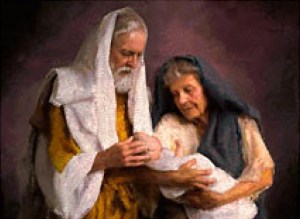
“Where is your wife Sarah?” they asked him. “There, in the tent, ” he said. Then one of them said, “I will surely return to you about this time next year, and Sarah your wife will have a son.” Now Sarah was listening at the entrance to the tent, which was behind him. Abraham and Sarah were already very old, and Sarah was past the age of childbearing. So Sarah laughed to herself as she thought, “After I am worn out and my lord is old, will I now have this pleasure?” Then the Lord said to Abraham, “Why did Sarah laugh and say, ‘Will I really have a child, now that I am old?’ Is anything too hard for the Lord? I will return to you at the appointed time next year, and Sarah will have a son.” Sarah was afraid, so she lied and said, “I did not laugh.” But he said, “Yes, you did laugh.”…Now the Lord was gracious to Sarah as he had said, and the Lord did for Sarah what he had promised. Sarah became pregnant and bore a son to Abraham in his old age, at the very time God had promised him. Abraham gave the name Isaac to the son Sarah bore him. When his son Isaac was eight days old, Abraham circumcised him, as God commanded him. Abraham was a hundred years old when his son Isaac was born to him. Sarah said, “God has brought me laughter, and everyone who hears about this will laugh with me.” And she added, “Who would have said to Abraham that Sarah would nurse children? Yet I have borne him a son in his old age.” The child grew and was weaned, and on the day Isaac was weaned Abraham held a great feast. But Sarah saw that the son whom Hagar the Egyptian had borne to Abraham was mocking, and she said to Abraham, “Get rid of that slave woman and her son, for that woman’s son will never share in the inheritance with my son Isaac.”…Sarah lived to be a hundred and twenty-seven years old. She died at Kiriath Arba (that is, Hebron) in the land of Canaan, and Abraham went to mourn for Sarah and to weep over her. Then Abraham rose from beside his dead wife and spoke to the Hittites. He said, “I am a foreigner and stranger among you. Sell me some property for a burial site here so I can bury my dead. ” The Hittites replied to Abraham, “Sir, listen to us. You are a mighty prince among us. Bury your dead in the choicest of our tombs. None of us will refuse you his tomb for burying your dead.”
Genesis 18:9-15, 21:1-10, 23:1-6

Dear God, I’m obviously skipping two major aspects of Sarah’s story this morning, and it’s mainly because I’ve already discussed them when talking about Abraham and Hagar. The first is her suggestion to Abraham that he have a child with Hagar. The other is the fact that Abraham sold her out at least twice (to Pharaoh and Abimelech). Both were terrible decisions on everyone’s part. The really odd part about Abimelech is that it happened when she was older and past childbearing years. She must have been very beautiful.

No, today, I want to focus on her and Isaac. She became pregnant in an improbable way. I’m sure she felt like you would never fulfill your promise to Abraham through her (see Hagar). Like she wasn’t part of the equation and was useless. Then when she hears the prophecy she laughs. Of course she laughs again after Isaac is born. Isaac’s life and just his being brought laughter to her. It’s a reminder to me that there are some things that money cannot buy, but this story is also a reminder to me to not try to be in such control of things. I don’t know what the relationship between Ishmael and Isaac was like, but it seems that the older Ishmael taunting Isaac at the celebration for his weaning was too much for her to bear. Any mother of two children will tell you that the older will tease the younger often. For Abraham, this was just his older son teasing his younger son. But for Sarah, it was totally different. It was the child of that woman teasing her precious child. This was her chance to get rid of both of them, and Sarah took it. I wonder how this served Isaac. How would he have been different if Ishmael had been around while he grew up? We saw that they joined together to bury their father later, so they certainly at least knew of each other. It’s a hard story.

Finally, we get Sarah’s death and burial. I am sure her life did not go as planned. On the one hand, she was rich. She was given to not only Abraham in marriage, but she was beautiful enough to be given in marriage to Pharaoh and Abimelech too. I’m sure that, to a large extent, she felt used–like Abraham’s property. Just one more possession to serve him. We aren’t told about her relationship with you. Did she worship you alongside Abraham? Did you find her special as well? She obviously hoped to be a mother, but gave up on that dream. And then you brought her laughter. I suppose that means she hadn’t had much laughter before that.

Father, I’m not sure what there is to learn from Sarah when it comes to motherhood, but this little focus on her has been a good opportunity to think more about who she was and what we know about what she did and what was done to her. For me, just help me to let go of my expectations and my attempts to plan things. You have been particularly good to me lately and blessed the fruits of my labor. Help me to continue to simply labor as unto you. Help me to serve you through my marriage, my parenting, and my work. Help me to bring a piece of you into the world.

In Jesus’s name I pray,

Amen

 
Leave a comment

Posted by on January 3, 2020 in Genesis, Mothers of the Bible


Tags: , , , , ,

Fathers of the Bible — Abraham and Isaac (Part 2)

Abraham was now a very old man, and the Lord had blessed him in every way. One day Abraham said to his oldest servant, the man in charge of his household, “Take an oath by putting your hand under my thigh. Swear by the Lord, the God of heaven and earth, that you will not allow my son to marry one of these local Canaanite women. Go instead to my homeland, to my relatives, and find a wife there for my son Isaac.” The servant asked, “But what if I can’t find a young woman who is willing to travel so far from home? Should I then take Isaac there to live among your relatives in the land you came from?” “No!” Abraham responded. “Be careful never to take my son there. For the Lord, the God of heaven, who took me from my father’s house and my native land, solemnly promised to give this land to my descendants. He will send his angel ahead of you, and he will see to it that you find a wife there for my son. If she is unwilling to come back with you, then you are free from this oath of mine. But under no circumstances are you to take my son there.” So the servant took an oath by putting his hand under the thigh of his master, Abraham. He swore to follow Abraham’s instructions. Then he loaded ten of Abraham’s camels with all kinds of expensive gifts from his master, and he traveled to distant Aram-naharaim. There he went to the town where Abraham’s brother Nahor had settled. He made the camels kneel beside a well just outside the town. It was evening, and the women were coming out to draw water. “O Lord, God of my master, Abraham,” he prayed. “Please give me success today, and show unfailing love to my master, Abraham. See, I am standing here beside this spring, and the young women of the town are coming out to draw water. This is my request. I will ask one of them, ‘Please give me a drink from your jug.’ If she says, ‘Yes, have a drink, and I will water your camels, too!’—let her be the one you have selected as Isaac’s wife. This is how I will know that you have shown unfailing love to my master.” Before he had finished praying, he saw a young woman named Rebekah coming out with her water jug on her shoulder. She was the daughter of Bethuel, who was the son of Abraham’s brother Nahor and his wife, Milcah. Rebekah was very beautiful and old enough to be married, but she was still a virgin. She went down to the spring, filled her jug, and came up again. Running over to her, the servant said, “Please give me a little drink of water from your jug.” “Yes, my lord,” she answered, “have a drink.” And she quickly lowered her jug from her shoulder and gave him a drink. When she had given him a drink, she said, “I’ll draw water for your camels, too, until they have had enough to drink.” So she quickly emptied her jug into the watering trough and ran back to the well to draw water for all his camels. The servant watched her in silence, wondering whether or not the Lord had given him success in his mission. Then at last, when the camels had finished drinking, he took out a gold ring for her nose and two large gold bracelets for her wrists. “Whose daughter are you?” he asked. “And please tell me, would your father have any room to put us up for the night?” “I am the daughter of Bethuel,” she replied. “My grandparents are Nahor and Milcah. Yes, we have plenty of straw and feed for the camels, and we have room for guests.” The man bowed low and worshiped the Lord. “Praise the Lord, the God of my master, Abraham,” he said. “The Lord has shown unfailing love and faithfulness to my master, for he has led me straight to my master’s relatives.” The young woman ran home to tell her family everything that had happened. Now Rebekah had a brother named Laban, who ran out to meet the man at the spring. He had seen the nose-ring and the bracelets on his sister’s wrists, and had heard Rebekah tell what the man had said. So he rushed out to the spring, where the man was still standing beside his camels. Laban said to him, “Come and stay with us, you who are blessed by the Lord! Why are you standing here outside the town when I have a room all ready for you and a place prepared for the camels?” So the man went home with Laban, and Laban unloaded the camels, gave him straw for their bedding, fed them, and provided water for the man and the camel drivers to wash their feet. Then food was served. But Abraham’s servant said, “I don’t want to eat until I have told you why I have come.” “All right,” Laban said, “tell us.” “I am Abraham’s servant,” he explained. “And the Lord has greatly blessed my master; he has become a wealthy man. The Lord has given him flocks of sheep and goats, herds of cattle, a fortune in silver and gold, and many male and female servants and camels and donkeys. “When Sarah, my master’s wife, was very old, she gave birth to my master’s son, and my master has given him everything he owns. And my master made me take an oath. He said, ‘Do not allow my son to marry one of these local Canaanite women. Go instead to my father’s house, to my relatives, and find a wife there for my son.’ “But I said to my master, ‘What if I can’t find a young woman who is willing to go back with me?’ He responded, ‘The Lord, in whose presence I have lived, will send his angel with you and will make your mission successful. Yes, you must find a wife for my son from among my relatives, from my father’s family. Then you will have fulfilled your obligation. But if you go to my relatives and they refuse to let her go with you, you will be free from my oath.’ “So today when I came to the spring, I prayed this prayer: ‘O Lord, God of my master, Abraham, please give me success on this mission. See, I am standing here beside this spring. This is my request. When a young woman comes to draw water, I will say to her, “Please give me a little drink of water from your jug.” If she says, “Yes, have a drink, and I will draw water for your camels, too,” let her be the one you have selected to be the wife of my master’s son.’ “Before I had finished praying in my heart, I saw Rebekah coming out with her water jug on her shoulder. She went down to the spring and drew water. So I said to her, ‘Please give me a drink.’ She quickly lowered her jug from her shoulder and said, ‘Yes, have a drink, and I will water your camels, too!’ So I drank, and then she watered the camels. “Then I asked, ‘Whose daughter are you?’ She replied, ‘I am the daughter of Bethuel, and my grandparents are Nahor and Milcah.’ So I put the ring on her nose, and the bracelets on her wrists. “Then I bowed low and worshiped the Lord. I praised the Lord , the God of my master, Abraham, because he had led me straight to my master’s niece to be his son’s wife. So tell me—will you or won’t you show unfailing love and faithfulness to my master? Please tell me yes or no, and then I’ll know what to do next.” Then Laban and Bethuel replied, “The Lord has obviously brought you here, so there is nothing we can say. Here is Rebekah; take her and go. Yes, let her be the wife of your master’s son, as the Lord has directed.” When Abraham’s servant heard their answer, he bowed down to the ground and worshiped the Lord. Then he brought out silver and gold jewelry and clothing and presented them to Rebekah. He also gave expensive presents to her brother and mother. Then they ate their meal, and the servant and the men with him stayed there overnight. But early the next morning, Abraham’s servant said, “Send me back to my master.” “But we want Rebekah to stay with us at least ten days,” her brother and mother said. “Then she can go.” But he said, “Don’t delay me. The Lord has made my mission successful; now send me back so I can return to my master.” “Well,” they said, “we’ll call Rebekah and ask her what she thinks.” So they called Rebekah. “Are you willing to go with this man?” they asked her. And she replied, “Yes, I will go.” So they said good-bye to Rebekah and sent her away with Abraham’s servant and his men. The woman who had been Rebekah’s childhood nurse went along with her. They gave her this blessing as she parted: “Our sister, may you become the mother of many millions! May your descendants be strong and conquer the cities of their enemies.” Then Rebekah and her servant girls mounted the camels and followed the man. So Abraham’s servant took Rebekah and went on his way. Meanwhile, Isaac, whose home was in the Negev, had returned from Beer-lahai-roi. One evening as he was walking and meditating in the fields, he looked up and saw the camels coming. When Rebekah looked up and saw Isaac, she quickly dismounted from her camel. “Who is that man walking through the fields to meet us?” she asked the servant. And he replied, “It is my master.” So Rebekah covered her face with her veil. Then the servant told Isaac everything he had done. And Isaac brought Rebekah into his mother Sarah’s tent, and she became his wife. He loved her deeply, and she was a special comfort to him after the death of his mother.
Genesis 24

Dear God, when comparing this story to the others stories in Genesis, it should probably not be overlooked how much space was given to this one scene. While doing these other stories, I have been struck by how economical the storytelling has been, but this one uses an entire chapter. We meet Rebekah and we meet Laban (whom we will meet later when it’s time for Jacob to marry). But there are two things I noticed about Abraham’s parenting of Isaac in this story:

  1. He wanted Isaac to NOT marry a Canaanite woman, but a woman from the family. He saw that it was important to find someone who would not pull Isaac away from you or the customs of worshipping you. The whole thing about keeping it in the family feels weird to me, but we will assume this wasn’t weird at the time because no one seems to blink an eye at it.
  2. He didn’t want Isaac to leave the area. He didn’t want him to go leave Canaan, but to stay there. I wonder how old Isaac was at this time. I know Sarah was 127 when she died, but I’m not totally sure how they measured years at that point, and I don’t know how old she was when he was born. I know that Abraham was 100 when Isaac was born and died at 175, but, again, I don’t know how long a year was in their time. My point is, at that point he didn’t trust Isaac to make the decisions that Abraham thought best.

So this is really a story, from a parenting perspective, about putting blinders on your child to help guide them. It would be helpful to know Isaac’s age for context, but there are certainly times in raising a child when you put blinders on them, and then there are times when you take them away and let them discover their own boundaries the hard way.

I was talking with someone last night about their granddaughter and the frustrating decisions she is making. The granddaughter is 20 and was only adopted by this woman’s daughter three or four years ago. She has seen a lot. She has lived a more difficult life than I probably ever will. And this grandmother wants to save her from some of the bad decisions she is making right now. As I talked to her, however, it became clear to me that, at this point, the best we can offer as parents or grandparents is a safe place/home base for the adult children as they figure out the boundaries of their lives for themselves. My grandmother once said that you can’t put an old head on young shoulders. So true.

Father, help me to know how to parent my adult children. Help me to know what to do and what not to do. Love them through me. Parent them as you need them to be parented at this stage of their lives through me. Grant me the serenity to accept the things I cannot change, the courage to change the things I can, and the wisdom to know the difference.

In Jesus’s name I pray,

Amen
 
Leave a comment

Posted by on January 2, 2020 in Fathers of the Bible, Genesis


Tags: , , ,

Fathers of the Bible — Abraham and Isaac (Part 1)

The Lord kept his word and did for Sarah exactly what he had promised. She became pregnant, and she gave birth to a son for Abraham in his old age. This happened at just the time God had said it would. And Abraham named their son Isaac. Eight days after Isaac was born, Abraham circumcised him as God had commanded. Abraham was 100 years old when Isaac was born…When Isaac grew up and was about to be weaned, Abraham prepared a huge feast to celebrate the occasion. But Sarah saw Ishmael—the son of Abraham and her Egyptian servant Hagar—making fun of her son, Isaac. So she turned to Abraham and demanded, “Get rid of that slave woman and her son. He is not going to share the inheritance with my son, Isaac. I won’t have it!” This upset Abraham very much because Ishmael was his son. But God told Abraham, “Do not be upset over the boy and your servant. Do whatever Sarah tells you, for Isaac is the son through whom your descendants will be counted. But I will also make a nation of the descendants of Hagar’s son because he is your son, too.” So Abraham got up early the next morning, prepared food and a container of water, and strapped them on Hagar’s shoulders. Then he sent her away with their son, and she wandered aimlessly in the wilderness of Beersheba…Some time later, God tested Abraham’s faith. “Abraham!” God called. “Yes,” he replied. “Here I am.” “Take your son, your only son—yes, Isaac, whom you love so much—and go to the land of Moriah. Go and sacrifice him as a burnt offering on one of the mountains, which I will show you.” The next morning Abraham got up early. He saddled his donkey and took two of his servants with him, along with his son, Isaac. Then he chopped wood for a fire for a burnt offering and set out for the place God had told him about. On the third day of their journey, Abraham looked up and saw the place in the distance. “Stay here with the donkey,” Abraham told the servants. “The boy and I will travel a little farther. We will worship there, and then we will come right back.” So Abraham placed the wood for the burnt offering on Isaac’s shoulders, while he himself carried the fire and the knife. As the two of them walked on together, Isaac turned to Abraham and said, “Father?” “Yes, my son?” Abraham replied. “We have the fire and the wood,” the boy said, “but where is the sheep for the burnt offering?” “God will provide a sheep for the burnt offering, my son,” Abraham answered. And they both walked on together. When they arrived at the place where God had told him to go, Abraham built an altar and arranged the wood on it. Then he tied his son, Isaac, and laid him on the altar on top of the wood. And Abraham picked up the knife to kill his son as a sacrifice. At that moment the angel of the Lord called to him from heaven, “Abraham! Abraham!” “Yes,” Abraham replied. “Here I am!” “Don’t lay a hand on the boy!” the angel said. “Do not hurt him in any way, for now I know that you truly fear God. You have not withheld from me even your son, your only son.” Then Abraham looked up and saw a ram caught by its horns in a thicket. So he took the ram and sacrificed it as a burnt offering in place of his son. Abraham named the place Yahweh-Yireh (which means “the Lord will provide”). To this day, people still use that name as a proverb: “On the mountain of the Lord it will be provided.” Then the angel of the Lord called again to Abraham from heaven. “This is what the Lord says: Because you have obeyed me and have not withheld even your son, your only son, I swear by my own name that I will certainly bless you. I will multiply your descendants beyond number, like the stars in the sky and the sand on the seashore. Your descendants will conquer the cities of their enemies. And through your descendants all the nations of the earth will be blessed—all because you have obeyed me.” Then they returned to the servants and traveled back to Beersheba, where Abraham continued to live.
Genesis 21:1-5,8-14,22:1-19

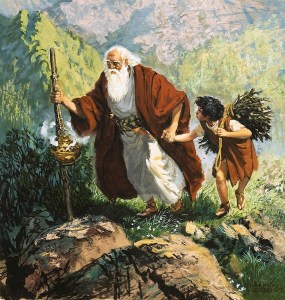
Dear God, when I was picking an image for this story I found it hard to pick from the ones that showed Isaac bound on the altar. I cannot imagine what kind of trauma and confusion that must have caused him. From his perspective, his father lied to everyone and had gone crazy. He was old. Was he senile? How was Isaac to know? I am hopeful that you let him in on your conversation with Abraham when you told him to not hurt him and that this was only a test. For Isaac’s sake, I hope you let him hear that. I wonder if Isaac ever told Sarah about it.

I also read somewhere once that Muslims have this same story in their history, but it is Ishmael who is be sacrificed. Of course, I’ll stick with the Isaac version, but, either way, I think the lesson is the same. What kinds of expectations do we, as fathers, put on our children? Do we expect them to carry on our name, accomplish what we never did, etc.? Do we find our fulfillment in them? Do we allow them and their potential to replace you? Is that what Abraham had done?

One thing that is clear through these stories of Abraham is that, while he loved you and worshipped you, he certainly loved himself and his own self-preservation more than being noble. He lied to Pharaoh and Abimelech about Sarah not being his wife so that they wouldn’t hurt him–giving her over to them to be their wife. He listened to Sarah’s suggestion to have a child with Hagar because they were not willing to wait and see how your plan unfolded. He excommunicated Hagar and Ishmael because…well, you apparently told him to do it, but it still seems like he sent them out to die instead of giving them some servants and supplies to ensure their survival. And then you felt the need to test him and break him through this story of having to sacrifice Isaac and the promise he so badly wanted you to keep, that you would make his descendants a great nation.

Father, I don’t know what you are calling me to do, but I pray that everything I do will be without regard to my own benefit. I suppose I need to be even more generous with my time and money because I have found myself being kind of selfish lately. I’ve been leaning towards being materialistic and covetous. I’ve been indifferent to the hardships of others. It’s terrible, I know. I am sorry. Please forgive me.

In Jesus’s name I pray,

Amen

 
Leave a comment

Posted by on January 1, 2020 in Fathers of the Bible, Genesis


Tags: , , , ,

Fathers of the Bible — Abraham (Ishmael)

Now Sarai, Abram’s wife, had not been able to bear children for him. But she had an Egyptian servant named Hagar. So Sarai said to Abram, “The Lord has prevented me from having children. Go and sleep with my servant. Perhaps I can have children through her.” And Abram agreed with Sarai’s proposal. So Sarai, Abram’s wife, took Hagar the Egyptian servant and gave her to Abram as a wife. (This happened ten years after Abram had settled in the land of Canaan.) So Abram had sexual relations with Hagar, and she became pregnant. But when Hagar knew she was pregnant, she began to treat her mistress, Sarai, with contempt. Then Sarai said to Abram, “This is all your fault! I put my servant into your arms, but now that she’s pregnant she treats me with contempt. The Lord will show who’s wrong—you or me!” Abram replied, “Look, she is your servant, so deal with her as you see fit.” Then Sarai treated Hagar so harshly that she finally ran away. The angel of the Lord found Hagar beside a spring of water in the wilderness, along the road to Shur. The angel said to her, “Hagar, Sarai’s servant, where have you come from, and where are you going?” “I’m running away from my mistress, Sarai,” she replied. The angel of the Lord said to her, “Return to your mistress, and submit to her authority.” Then he added, “I will give you more descendants than you can count.” And the angel also said, “You are now pregnant and will give birth to a son. You are to name him Ishmael (which means ‘God hears’), for the Lord has heard your cry of distress. This son of yours will be a wild man, as untamed as a wild donkey! He will raise his fist against everyone, and everyone will be against him. Yes, he will live in open hostility against all his relatives.” Thereafter, Hagar used another name to refer to the Lord, who had spoken to her. She said, “You are the God who sees me.” She also said, “Have I truly seen the One who sees me?” So that well was named Beer-lahai-roi (which means “well of the Living One who sees me”). It can still be found between Kadesh and Bered. So Hagar gave Abram a son, and Abram named him Ishmael. Abram was eighty-six years old when Ishmael was born…When Isaac grew up and was about to be weaned, Abraham prepared a huge feast to celebrate the occasion. But Sarah saw Ishmael—the son of Abraham and her Egyptian servant Hagar—making fun of her son, Isaac. So she turned to Abraham and demanded, “Get rid of that slave woman and her son. He is not going to share the inheritance with my son, Isaac. I won’t have it!” This upset Abraham very much because Ishmael was his son. But God told Abraham, “Do not be upset over the boy and your servant. Do whatever Sarah tells you, for Isaac is the son through whom your descendants will be counted. But I will also make a nation of the descendants of Hagar’s son because he is your son, too.” So Abraham got up early the next morning, prepared food and a container of water, and strapped them on Hagar’s shoulders. Then he sent her away with their son, and she wandered aimlessly in the wilderness of Beersheba.
Genesis 16:1-16,21:8-14

Dear God, there is so much to discuss with Abraham as a father that I thought I would split it into two parts. I’ll look at Ishmael first, and then Isaac.

What a tragedy that this even took place. I have to say that Abraham really didn’t seem to have much regard for women. He gave Sarai/Sarah away to other men twice out of fear for his life (Pharaoh and Abimelech). He took the slave girl as his wife and conscripted her into being the fulfillment of your promise to him. And now he gives into Sarah’s command to send Hagar and Ishmael off into the wilderness with just some water and food. No servants to go help her get established. No camels or livestock. Not real settlement for his wife except marching orders.

So how did all of this make Ishmael feel as a son? Here are some questions:

  • What did it teach him about how he should treat women? I suppose he saw his mother’s love for him. He had to have appreciated who she was. In fact, I would imagine that it was men and Abraham that he had trouble trusting. But much like I think Solomon learned a lack of respect for women from his father, I suspect that what Abraham modeled here wasn’t very helpful to the women who would encounter Ishmael.
  • How did Ishmael respond to his dad? I think it is important to note that Islam tells all of this a little differently. For example, they apparently tell the story of Abraham being tested and willing to sacrifice Isaac with Ishmael in the Isaac role. I don’t know where the truth in that story is, but either way, all of this would have to leave a child with trust issues.
  • Did Ishmael ever get any fatherly love/nurturing from Abraham? None is really recorded. The prophecy over Ishmael is that he will have conflict with others all of his life, but that’s pretty much how he was raised. His mother and Sarah were in conflict. Abraham seemed unable to control the enmity between them. He was probably treated differently by others. When he and him mom were sent away and he almost died, I’m sure it made him bitter. And then the years of struggling in the wilderness while Isaac grew up in what at the time would have been considered luxury. Yeah, I can see where this would have left him bitter and very tough.

I think the big take aways from this thread of Abraham’s story are that we should wait on your timing, and, if we get out ahead of you and make a mistake, we should humbly do our best to pay the price and natural consequences of our actions and not try to mitigate their impact on our personal lives by making them someone else’s problem. Ishmael and Hagar got caught in a pretty bad web. I am sorry for them. I’m also sorry for any times when I’ve given my own children any reason to not trust me. I’m sorry for anything I might have done that shifted the burden of my mistakes/sin from me to anyone else, including them. Please help me to always wait on your timing and to take responsibility for the sins I commit.

In Jesus’s name I pray,

Amen

 
Leave a comment

Posted by on December 31, 2019 in Fathers of the Bible, Genesis


Tags: , , , , ,